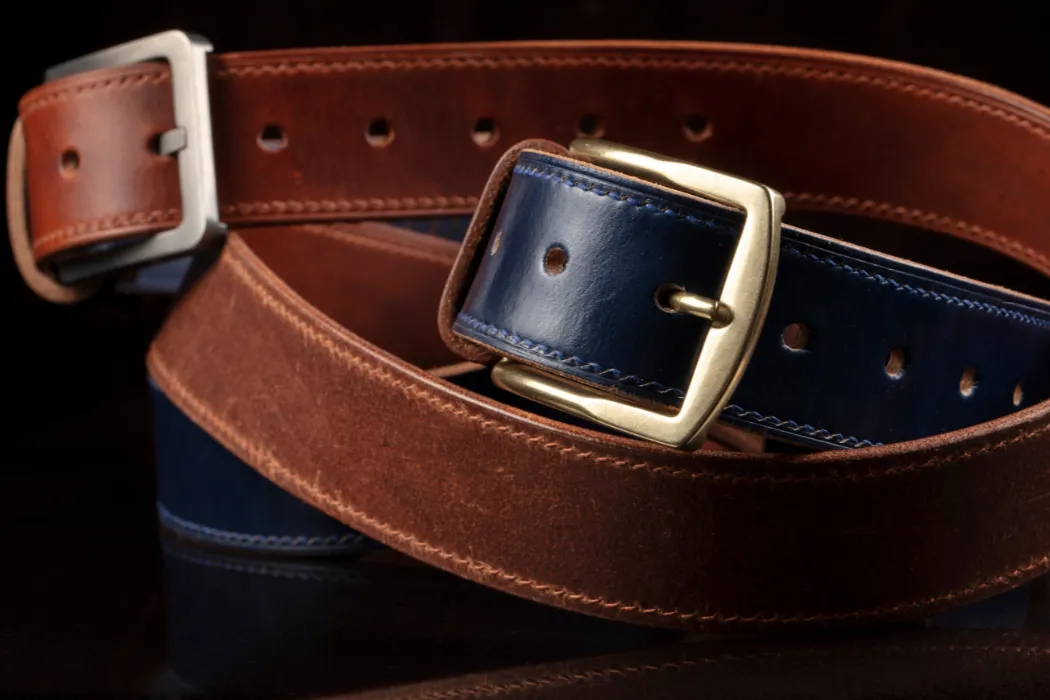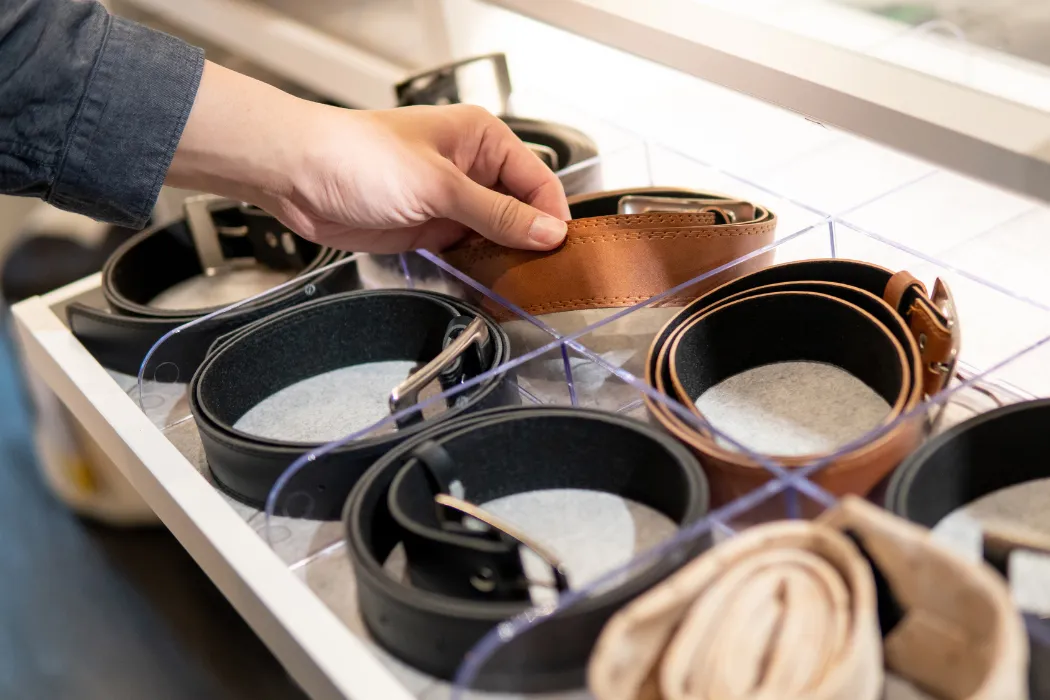
For manufacturers, wholesalers, and private-label brands, understanding the different types of leather belts is critical to balancing durability with design. From full-grain work belts that withstand up to 9.5 oz of load-bearing thickness to ISO‑tested dress belts meeting tensile strengths of 20 N/mm², every variation serves a defined performance and market purpose. Without this technical clarity, procurement teams risk mismatching material specifications with end-user needs, leading to higher return rates or inconsistent quality perception.
This guide breaks down the complete spectrum of leather belt styles—dress, casual, and Western—covering their grade, width, and functional performance. You’ll discover how construction methods like stitching versus bonding affect longevity, how reversible and braided designs expand product versatility, and why surface finishes and buckle materials impact both pricing and consumer perception. Whether you source OEM belts or develop branded collections, this article provides the benchmarks and technical cues needed to differentiate high-performing leather belts across global B2B markets.
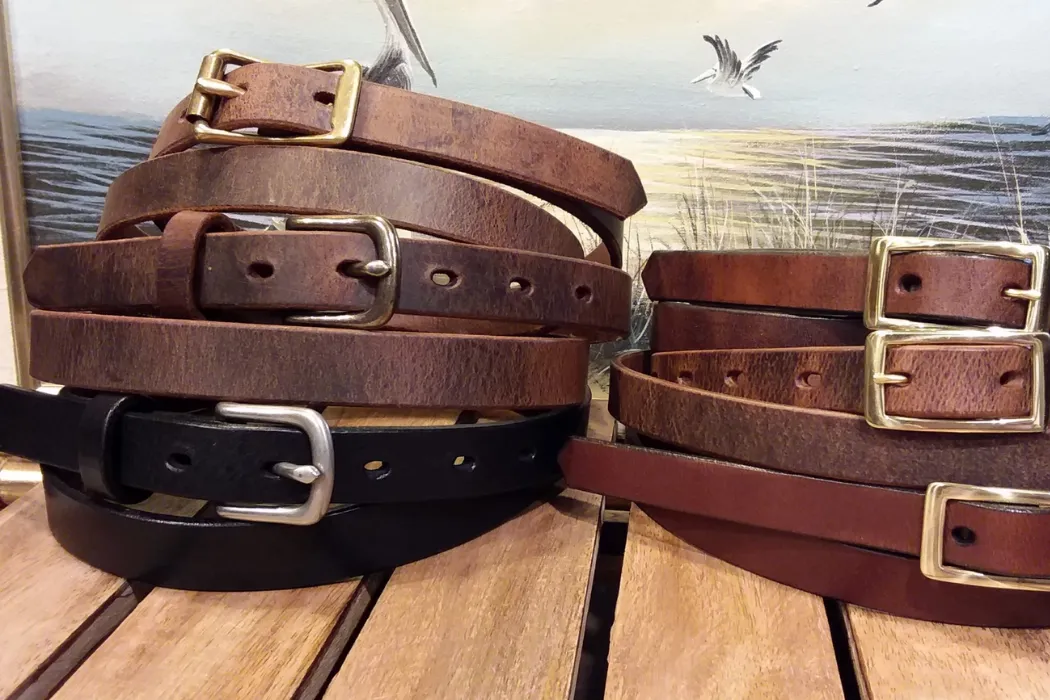
How Do Function and Fashion Define Types?
Function determines a belt’s structural performance and usage, while fashion defines its aesthetic style. Full-grain utility belts emphasize durability, thickness, and load-bearing ability, whereas fashion-oriented belts use refined finishes, embossing, and slimmer profiles to complement attire and trends.
| Leather Grade | Functionality Attributes | Fashion Characteristics |
|---|---|---|
| Full-grain / Top-grain | High tensile strength, dense fibers, 8.5–9.5 oz thickness for utility or work-grade durability. | Natural or polished finishes, minimal embossing, classic profiles for premium casual or rugged aesthetics. |
| Corrected-grain / Genuine | Moderate durability, adaptable for daily wear with structured reinforcement. | Embossed or color-treated surfaces, slimmer (1–1.5″) widths, refined or braided designs for dress or trend applications. |
Functional Attributes: Durability, Grade, and Structural Purpose
The structural performance of a leather belt depends primarily on its grade, thickness, and cut. Full-grain and top-grain leathers, composed of dense collagen fibers, offer maximal tensile strength and superior resistance to elongation or cracking. These grades are the preferred choice in heavy-duty or professional environments due to their load-bearing reliability and long-term wear resistance.
Work and utility belts typically use 8.5–9.5 oz full-grain double butt cuts, providing consistent fiber uniformity across the belt length. Widths between 1.5 and 2 inches support roller or heavy-duty buckles that distribute load stresses efficiently. Functionally, these belts correspond to industrial classifications like HTS 4203.30.0000 under U.S. customs codes for robust leather goods, highlighting how engineering thickness and grade specifications define performance type.
Fashion Influence: Aesthetics, Texture, and Style Direction
Fashion-driven belts focus on surface finishing, pattern treatment, and proportion to align with aesthetic appeal and wardrobe integration. Corrected-grain leather, for example, undergoes sanding or embossing to produce uniform textures or exotic effects such as crocodile or snake patterns. These design treatments enhance visual continuity and tactility for market differentiation.
In dress or trend-oriented categories, belt profiles are slimmer—typically 1 to 1.5 inches wide—with polished frame or prong-style buckles to support refined silhouettes. Surface coatings adhering to EU CN standards (≤0.15 mm) enable thin yet durable finishes, maintaining color stability and high-gloss appeal. These aesthetic decisions frame fashion belts as controlled design artifacts where visual harmonization and tactile characteristics serve as key differentiators alongside structural balance.
What Defines a High-Quality Dress Belt?
A high-quality dress belt is defined by full- or top-grain leather meeting ISO performance criteria, corrosion‑resistant hardware, precise stitching, defect‑free construction, and a dress‑appropriate 25–40 mm width that balances durability and refined appearance.
Leather Quality and Craftsmanship Standards
Premium dress belts begin with full‑grain or top‑grain leather that displays a uniform, tight texture and cleanly polished edges. These materials maintain durability while allowing for a refined surface suitable for formal attire. Stitching is small, tight, and even, contributing both to mechanical strength and visual symmetry.
The typical dress‑belt width ranges from 25 mm to 40 mm (1–1.5 in), with narrower designs tending toward greater formality. High‑end belts often use a single strip or dual‑layer construction of full‑grain leather, providing balanced rigidity without excess thickness.
A smooth, uniform finish and consistent color coating are hallmarks of quality. Buckles and fittings must be corrosion‑resistant, smooth in operation, and devoid of rough or sharp edges that could damage clothing or weaken the strap over time.
Technical and Performance Specifications
From a standards perspective, high‑quality belt leather must comply with defined ISO mechanical and chemical criteria. According to ISO 3376:2020, tensile strength should reach at least 20 N/mm², with elongation at break between 30 % and 80 %. The shrinkage temperature of leather, a measure of its thermal stability and tanning quality, must be at least 75 °C as tested by ISO 3379.
Chemical stability parameters include a pH range of 4.5–5.5 and a grease content between 3 % and 12 %, verified under ISO 4045:2018. These values prevent acid rot and brittleness. Coating durability is validated by finish color fastness of ≥ 4 (ISO 11640:2018) and adhesion strength of ≥ 3.5 N dry and ≥ 2.0 N wet (ISO 11644), ensuring the surface resists abrasion and humidity.
At the finished‑product level, a completed belt must withstand a minimum breaking strength of 400 N under tensile load. Hardware must be corrosion‑resistant and free of structural flaws or sharp edges. Manufacturing quality further demands uniformly aligned stitching and freedom from defects such as cracking, faulty joints, grain damage, or broken threads, with defect tolerances governed by industry sampling standards.
Collectively, these criteria ensure that a dress belt combines scientific reliability with visual precision. Compliance with ISO benchmarks verifies physical integrity, while craftsmanship—stitched accuracy, aligned components, and polished hardware—translates engineering standards into a visibly refined and durable accessory for formal wear.
What Features Look for in a Casual Belt?
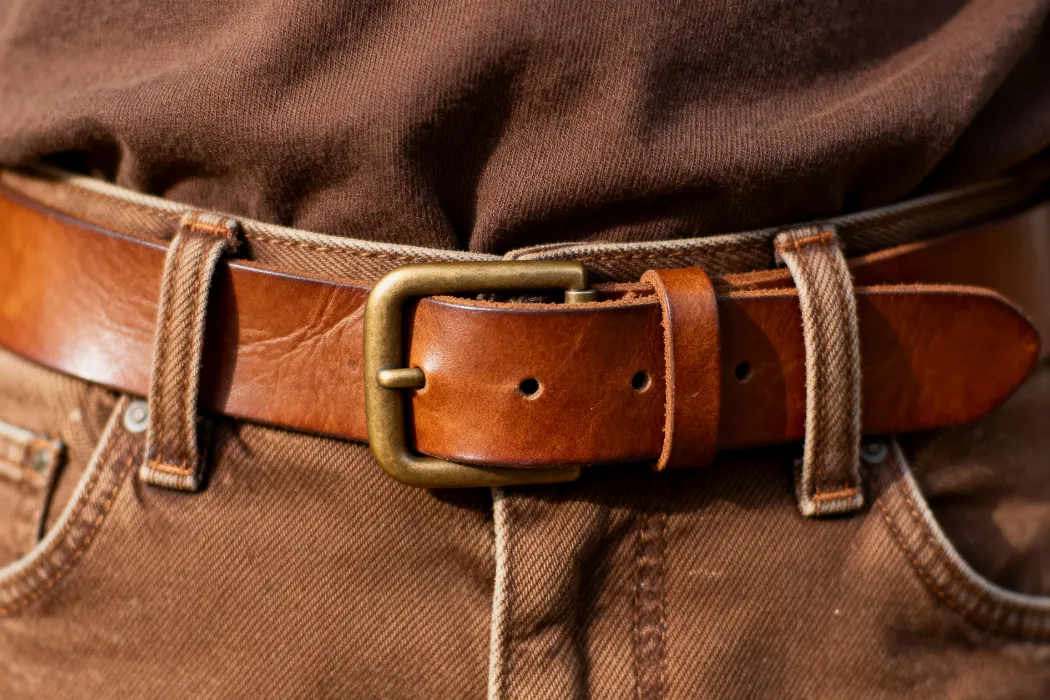
Casual belts are wider (1.5–2 inches), thicker, and made from durable full-grain or cowhide leather. Their finishes, larger buckles, and natural textures match jeans or chinos rather than suits, balancing comfort with durability for daily use.
Core Design and Style Characteristics
Casual belts generally range from 1.5 to 2 inches (38–51 mm) wide, matching the broader loops of jeans and chinos. This width not only stabilizes the belt physically but also contributes to the visual proportion typical of casual outfits.
They typically use full-grain cowhide or top-grain leather, materials that emphasize visible grain and natural irregularities. These attributes create the rugged visual appeal associated with relaxed styling while assuring durability under frequent bending and tension.
Finishing styles often favor matte or distressed surfaces rather than the glossy polish found on formal belts. Over time, the surface develops a patina that enhances its aesthetic depth and signals authentic full-grain quality.
Buckles on casual belts tend to be larger or more decorative — frequently plate or box-frame styles. These allow variation in metal tone and texture, integrating well with denim, workwear, or outdoor attire.
Material Quality and Durability Considerations
Durability of casual belts is primarily determined by the integrity of the leather and stitching. Full-grain cowhide can retain shape and tensile strength for more than a decade of everyday strain, vastly outperforming polyurethane (PU) leathers that often degrade within months of regular use.
Thickness is another key differentiator from dress belts, with casual styles exceeding about 3 mm to ensure firm structure and load-bearing capability for heavier trousers. This added material density provides support yet must remain flexible enough to avoid extraneous bulk at belt loops.
Quality construction includes uniform, tight stitching, color-matched edges, and securely fastened buckle joints. These workmanship details prevent pulling, fraying, or uneven stress distribution along the strap—common failure points in poorly crafted belts.
Sizing standards recommend adding approximately 2–3 inches (5–7 cm) beyond pant waist measurement. A width of about 40 mm (1.5 inches) serves as the most typical casual benchmark, balancing functionality and proportional appeal across varied waist sizes.
In summary, a true casual belt combines practical proportions, natural leather texture, and robust construction criteria that deliver long service life while maintaining visual alignment with informal clothing, outdoor attire, and everyday wear.
Custom Leather Belts Crafted for Your Brand
How Are Western and Tooled Belts Made?
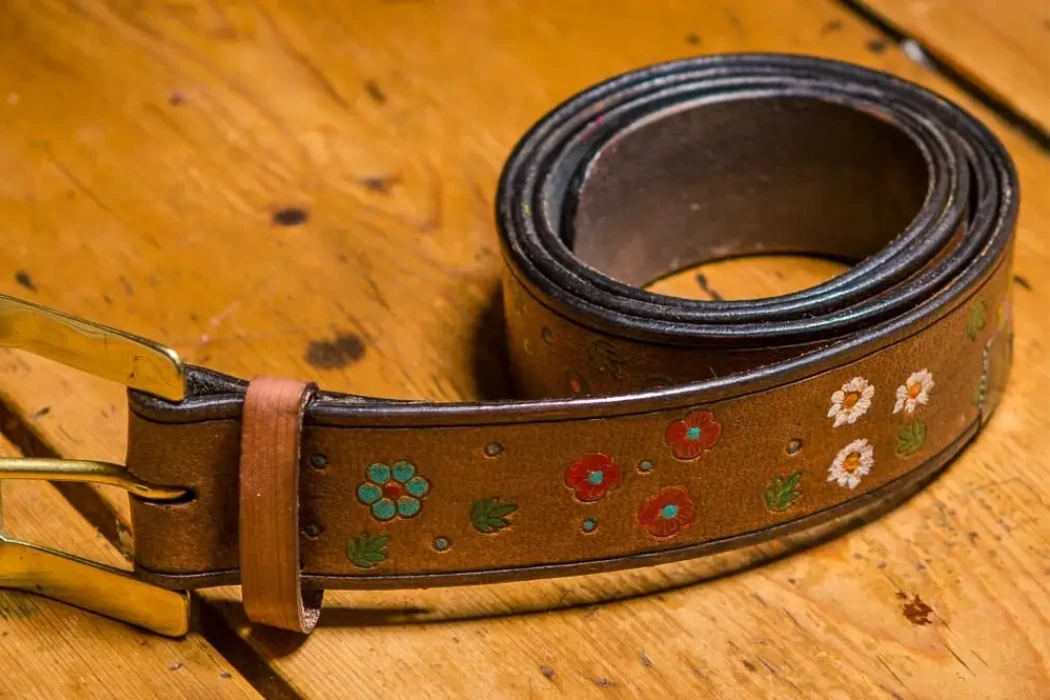
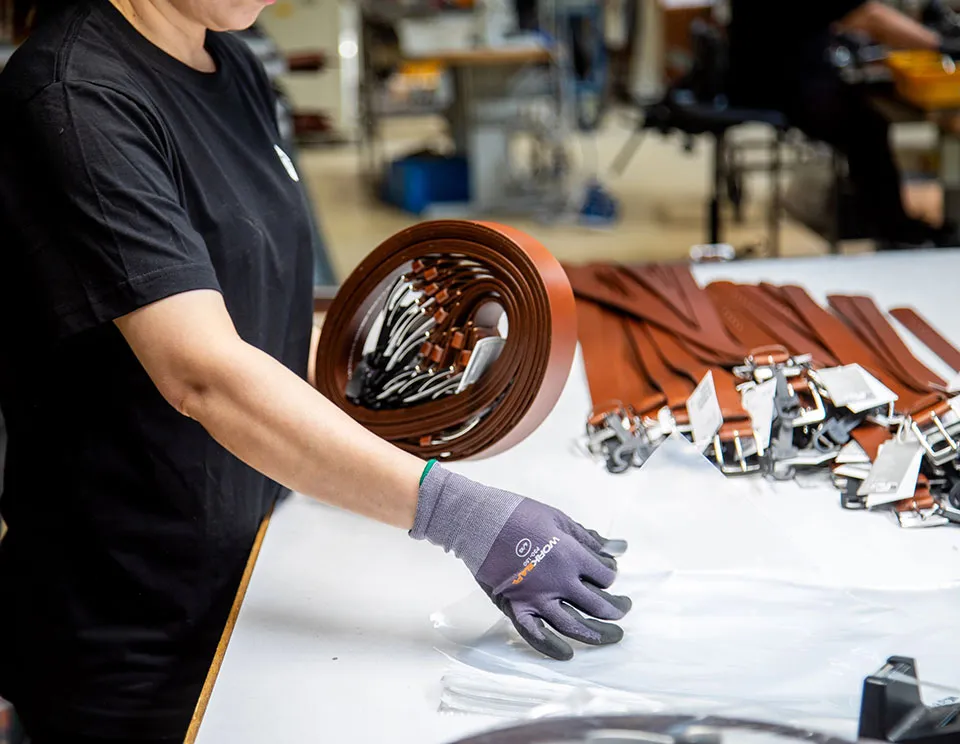
Western and tooled belts are crafted through precise cutting, edging, stamping, and finishing processes. They start from chrome-tanned leather, which is cut, skived, tooled with decorative stamping, stitched, riveted, and finished for durability and aesthetic appeal.
| Property | Specification | Notes |
|---|---|---|
| Density | 1.1–1.5 g/cc | Dependent on tanning and finish layer. |
| Tensile Strength | 2,000–6,000 psi | ASTM D-624 Die C range for leather straps. |
| Elongation at Break | 150–450% | Ensures flexibility for stamped surfaces. |
Core Process of Crafting Western and Tooled Belts
Manufacturing begins with the selection of chrome-tanned leather hides or split leathers specifically suited for embossing and decorative applications. Craftsmen select sheets within a consistent gauge of approximately 0.05–0.15 inch to maintain balance between flexibility and durability. This raw stock is prepared for cutting, ensuring uniformity in grain texture and thickness.
Strap cutting uses automated strap cutting machines equipped with parallel blades that slice the hide into continuous, even-width strips. Precision here is critical, maintaining tolerances often below 0.005 inch. Following this, edges are skived to achieve consistent tapering and to prevent thickness bulges once edges are folded or burnished.
After edge treatment, a lining—usually split grain leather or a synthetic reinforcement layer—is attached using leather paste. The bonded strap undergoes flat-bed stitching to secure the lining and trimmed to final dimensions. Before finishing, tooling or embossing is executed using mechanical or hydraulic press dies that imprint Western motifs and patterns into the leather surface.
The buckle end preparation stage defines the working geometry for attachment. Typically, spacing for punched holes measures 2 5/8 inch from the tip to the initial hole and 3 3/8 inch for prong fitting alignment. Rivets or press studs are installed to secure the buckle assembly, after which the belt edges are final-set, dyed, burnished, and finished with wax or protective coating.
Technical Specifications and Quality Standards
Finished leather used in Western and tooled belt production exhibits densities between 1.1–1.5 g/cc with tensile strengths of 2,000–6,000 psi, ensuring structural integrity under continuous flex. Elongation at break values of 150–450% allow the belts to retain pattern depth without cracking during wear and bending cycles.
Hardness properties typically start at Shore A 80–99, stabilizing to 75–95 after 15 seconds under load. This ensures edge resilience while permitting manageable flexibility during tooling. Tear resistance, evaluated per ASTM D-624 Die C, falls between 200–500 lbs/in, granting high durability against lateral stresses encountered at buckle joints and punch holes.
The softening point remains below 380°C, allowing heat-embossing operations to occur without dimensional distortion. Additional parameters include belt loop dimensions averaging 3/8 inch in width and at least 4 inches in length. These assemblies are attached using adhesives or stitching matched to belt thickness.
Manufacturing quality assurance is regulated via certifications such as ISO 9001 for process management, BSCI for social compliance, and Leather Working Group (LWG) credentials for environmentally responsible tanning. These standards collectively govern consistent tensile metrics, dimensional accuracy, and environmentally compliant production throughout the Western and tooled belt craft cycle.
How Are Braided Leather Belts Constructed?
Braided leather belts are created by slicing full-grain or vegetable-tanned cowhide into narrow, flexible strips, then weaving them—often around a core—before adding leather-wrapped buckles, loops, and finished edges using burnishing, waxing, or dyeing techniques for strength and visual appeal.
Core Materials and Braiding Principles
Braided belt construction begins with high-quality cowhide, typically full‑grain or vegetable‑tanned, which provides the tensile strength and wear resistance required for daily use. The hides are initially around 3.0–3.5 mm thick and are split down to approximately 2.0–2.8 mm to improve flexibility and reduce bulk in the weave.
Each leather section is precisely sliced into 3–6 mm-wide strands that ensure a consistent visual pattern and structural balance. The edges of these strips are skived and beveled, reducing friction and improving the smooth appearance where strands interlace. This pre-conditioning step is essential to prevent cracking and maintain even tension during braiding.
Some braided belts incorporate a supportive inner core made of cotton rope or narrow leather lacing. This internal core stabilizes the braid diameter and prevents deformation when worn. Strand width and number are chosen so that the combined width roughly matches the circumference of the core, creating a braid that sits flush with no visible gaps.
The relationship between strand width and core size follows an engineering logic: for a 50 mm-circumference rope core, four 12–13 mm strands produce a compact, gap‑free weave. This proportionality ensures the belt’s tension and elasticity are evenly distributed along its length, preserving its shape over time.
Phases of Manufacturing and Technical Specifications
According to production data from OEM manufacturers like Lider Kemer, braided belt fabrication typically includes a 12‑phase workflow starting from hide selection to final packaging. Initial leather inspection confirms the grain density and uniformity required for consistent strand cutting, followed by precision slicing using calibrated strap cutters to obtain 3–6 mm laces of equal width.
The braiding phase can be executed on manual braid benches or mechanical braiding stations specifically configured for leather materials. The interlacing process inherently shortens the effective strip length by about 25%, meaning a 120 cm blank yields a final 90 cm braided section after compaction. Manufacturers account for this contraction when determining initial strand lengths.
Following braiding, the belt’s terminal ends are pressed flat, glued, and reinforced for buckle installation. Metal buckle frames are sometimes wrapped in the same leather for color uniformity and attached via rivets or lock stitching through the flattened braid area. Additional keepers or loops are added to secure the belt tongue during wear.
Edge finishing processes such as sanding, hand dyeing, and waxing close the open edges and enhance the belt’s durability and luster. Completed braided belts typically measure between 30–35 mm in overall width and approximately 3–3.5 mm in composite thickness. Vegetable‑tanned cowhide is often chosen for its superior tear resistance and stability under repeated flexing compared to chrome‑tanned varieties, ensuring the product maintains both form and function even with continuous use.
How Do Reversible Belts Work?
Reversible belts use a flip or rotating buckle mechanism allowing the strap to turn 180° between two finished sides. A locking clamp or pivot pin keeps the strap secure while letting users switch between colors or textures easily.
The Mechanics Behind Reversible Buckle Designs
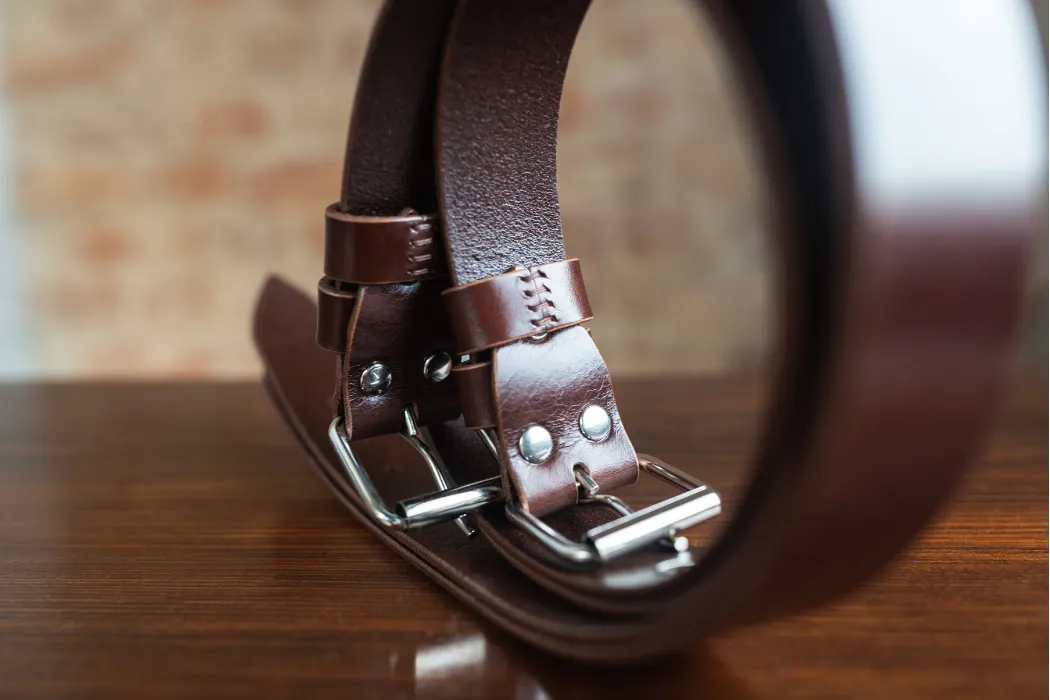
Typical reversible belts rely on a pivot or 180° rotating buckle mechanism integrated into the frame, allowing the belt strap to rotate between two leather sides. This mechanical pivot defines how the belt can invert the facing without detaching the strap from its buckle anchor.
The system combines two actions: a mechanical interface that manages the rotation axis and a locking latch or clamp that fixes the chosen face securely during wear. These mechanisms ensure the buckle can rotate with stability but prevent unintended slippage once the wearer selects a side.
Technical Structures and Patented Mechanisms
Patent US 4,419,792 employs a pivot pin, keeper block, and toothed latch lever that moves through a “top dead center” position, producing a self-locking effect to prevent accidental release. This design integrates a pivotable frame on a transverse pin and uses a serrated rib to clamp the strap firmly while enabling controlled 180° rotation of the buckle frame.
Patent US 2,159,857 adopts a flexible connecting system featuring loops and snap fasteners to detach and reverse the belt body without moving the buckle. Modern implementations, such as those from Von Baer and Hermès, streamline this concept using 180° flip or twist heads, achieving smooth rotation while maintaining structural reliability under waist tension.
Reversible belts function by integrating two precise engineering systems: a rotational joint, often a pin or swivel arrangement, and a locking feature, such as a toothed clamp, snap loop, or folded retention structure. These components balance flexibility for rotation with durability against the everyday forces acting on a belt.
Commercially, Von Baer’s Premier reversible belt exemplifies the engineering logic with its 180° rotating buckle, while supplier listings on Made‑in‑China detail reversible flip-belt assemblies around 3.5 cm strap width and 105–125 cm length specifications. Hermès’ “H Day & Night” model refines the system further, combining luxury design aesthetics with mechanical precision to enable reversible usability without compromising material integrity.
What Are the Best Buckle Finishes?
The best buckle finishes pair corrosion-resistant base metals like 304 or 316L stainless steel or solid brass with durable surfaces such as polished, brushed, or antique textures suited to the wearer’s use and style preference.
Overview of Premium Buckle Finishes and Base Metals
304 and 316L stainless steels provide exceptional corrosion resistance through a 1–5 μm chromium-rich passive layer; 316L is premium for its molybdenum-enhanced protection against sweat and chloride exposure. These steels are valued because their passive films self-heal when scratched, ensuring lasting performance in formal or daily belt applications without dependence on external plating.
Solid brass offers rust-free performance and a natural patina suitable for heritage belts, while zinc alloys (Zamak) serve cost-conscious or decorative designs with adequate plating support. Brass provides machinability and a warm tonal appeal that ages attractively, whereas zinc alloys enable complex geometries through die casting. However, the latter relies heavily on surface plating thickness and adhesion for durability.
Technical Characteristics, Durability, and Style Matching
Polished or ultra-polished silver-tone finishes on stainless steel (e.g., 35 mm 316L polished buckles) are ideal for formal belts where mirror reflectivity is desired. These polished surfaces maximize reflectivity and highlight alloy uniformity, while the smooth chromium oxide film resists fingerprinting when regularly cleaned. Such finishes are best for minimal-motion environments like dress attire.
Brushed, matte, or antique finishes on brass or plated alloys hide scratches and complement casual or rustic styles, while electroplated gunmetal or PVD matte black coatings add fashion focus and hypoallergenic benefits for modern lines. Brushed and matte finishes diffuse light, concealing abrasions, whereas antique treatments intentionally oxidize the surface to produce deeper tonal variation. PVD coatings on stainless or alloy substrates also improve wear hardness and color retention, achieving a more durable, allergen‑resistant option for contemporary fashion belts.
From a performance perspective, polished or brushed 304/316L stainless finishes deliver the highest real-world service life. Brass with antique or lightly polished finishes balances tradition and mechanical robustness, while plated or PVD finishes on zinc alloys provide affordable decorative options better suited for light or occasional wear. Each finish type supports a distinct visual and functional niche, ensuring users can align durability, maintenance effort, and aesthetic preference according to their belt’s purpose and environment.
What is the Difference: Stitched vs Bonded?
Stitched belts join full-grain leather layers using durable threads and sometimes adhesive, ensuring long-term strength, while bonded belts are made from leather fibers mixed with synthetic binders that tend to crack and delaminate within months.
How Stitched Leather Belts Are Built
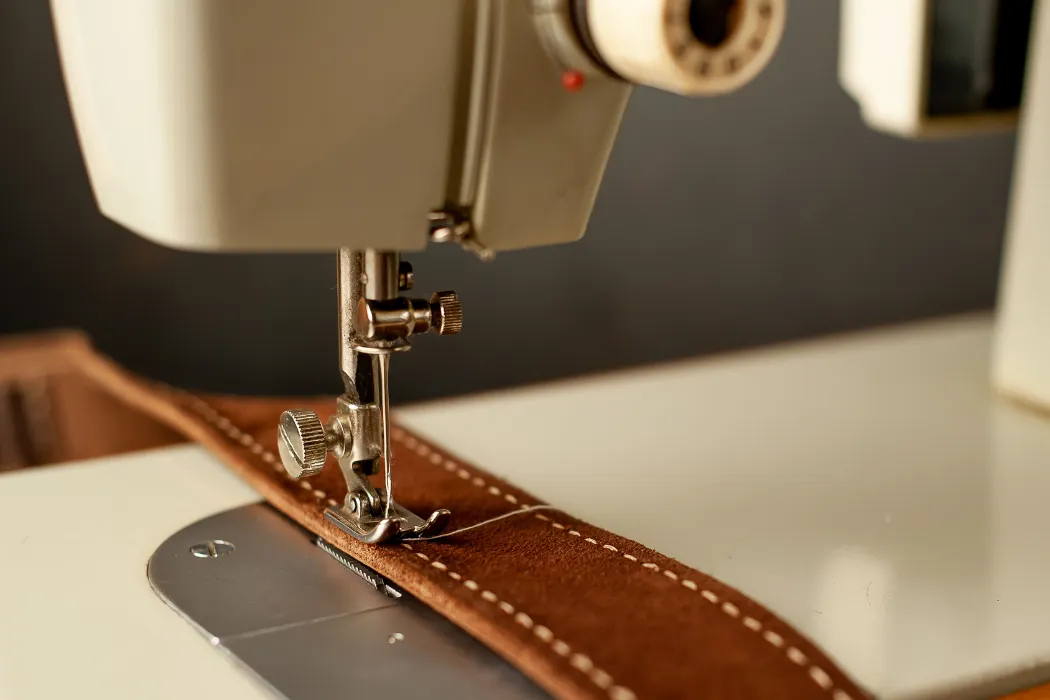
Stitched belts often combine two full-grain leather layers with strong thread and adhesive bonding. This design achieves a total weight of around 18–20 oz, making it ideal for both dress and heavy-duty applications. The multi-layer structure ensures even thickness, reduced flex fatigue, and superior load-bearing capacity compared to single-ply belts.
In hand saddle stitching, two needles pass a single waxed thread through each hole in opposite directions. This technique produces remarkable seam integrity — one broken stitch does not cause unraveling. Machine stitching, while faster and more consistent, uses a continuous loop of thread that can unravel if a single point fails. The waxed threads in saddle stitching also improve resistance to moisture and shear stress at the seam junctions.
Why Bonded Leather Belts Fail Early
Bonded leather is manufactured by combining 10–30% leather fibers with polyurethane or latex binders on a reinforced fiber mesh base. Because it lacks the natural collagen structure of full-grain leather, bonded material does not breathe, stretch evenly, or develop a patina. The synthetic surface coating hides defects but cannot match the tensile strength or elastic recovery of solid leather layers.
Performance testing and real-world use show that bonded belts often crack or delaminate within six months due to adhesive fatigue. As the belt flexes repeatedly, the binder layers lose cohesion and the thin top film separates from the backing. This structural weakness limits bonded belts to low-cost fashion items rather than long-lasting accessories. In contrast, stitched multi-ply full-grain belts show no layer separation under the same conditions, maintaining both aesthetic and mechanical reliability over time.
In engineering terms, stitched leather provides a distributed load path through both mechanical stitching and adhesive overlap, maximizing tensile strength and preventing catastrophic failure. Bonded leather depends entirely on adhesive integrity, which deteriorates under heat, sweat, and bending stress. The comparative data highlights that stitched constructions support extreme belt thicknesses up to 20 oz, whereas bonded designs rarely sustain structural integrity beyond a few months of wear.
What Are the Belt Trends for 2026?
Belt trends for 2026 balance modern technology and classic style—expect vegetable-tanned leather, premium synthetics, 3D and laser-cut textures, adjustable and smart buckles, and layered or stacked styling dominating both men’s and women’s categories.
Modern Style Directions and Aesthetic Influences
Runway presentations from Rachel Comey, Michael Kors, Tom Ford, and Isabel Marant clearly indicate a “stacked belt” revival—two belts worn together, often mixing skinny silhouettes or grommeted designs with dual-tone leather contrasts. This layered use of belts reintroduces variety to waist styling while preserving wearability.
Across mainstream and luxury collections, minimalist silhouettes stand out. Slim belt profiles, scaled-down buckles, and polished metal-heavy decorations define the 2026 accessory language. These details modernize wardrobe staples without straying from functional restraint.
At a demographic level, women’s belts exhibit sustained growth owing to higher income and increased participation in the workforce. This correlates with a marked surge in demand for fabric-based and elastic-backed variants that prioritize comfort while enabling distinctive textural appeal.
Simultaneously, fashion houses are recalling mid-width, heritage-inspired leather straps. These pieces merge archival hardware forms with contemporary finish treatments, allowing heritage design language to integrate seamlessly with modular layering and dual‑belt compositions.
Materials, Technology, and Manufacturing Innovation
According to market research, the global fashion belt sector is projected to grow at a 5.9% CAGR from 2023 through 2030. This expansion is underpinned by sustained innovation in adjustability, elasticity, and durability—three engineering dimensions that influence both buckle mechanisms and strap materials.
Leather innovation for 2026 centers on vegetable-tanned and low-impact dyed hides, coupled with surface engineering methods such as laser-cut and 3D-printed overlays. These processes generate perforated, sculptural belt textures and support reduced environmental load without altering traditional production line compatibility.
High-performance synthetics—particularly polyurethane (PU) and polyester—continue to mirror natural leather’s mechanical characteristics, including flexural endurance and tensile strength. Their increased role in mid-market belts underlines a sustainability-focused shift toward non-animal, recyclable materials.
Hardware and fastening systems are advancing too. Automatic ratchet buckles, offering millimeter-level adjustability, now pair with NFC-enabled smart modules that document origin, authenticity, and lifecycle tracking. These digital enhancements make belts active participants in connected fashion ecosystems and support emerging traceability regulations.
While technological integration accelerates, exotic leathers—alligator, snake, and crocodile—retain importance in the premium and collector segments. Their inherent texture depth and structural durability sustain demand for high-end offerings positioned at the intersection of craftsmanship and longevity.
Final Thoughts
Leather belts embody the intersection of craftsmanship, engineering, and fashion aesthetics. From dress belts that prioritize precision stitching and ISO-standard performance, to rugged Western and casual designs defined by full-grain durability and texture, each style serves a unique balance of function and form. Understanding the differences in material quality, buckle construction, and finish allows wearers to make informed, value-driven choices that extend both longevity and style coherence across their wardrobe.
As trends evolve toward sustainability, smart adjustability, and layered styling, the future of leather belts will emphasize traceable production and material innovation while retaining the timeless appeal of heritage leathercraft. Investing in high-quality, responsibly sourced leather accessories ensures not just aesthetic refinement but also a tangible connection to durability, performance, and enduring style in every detail.
Frequently Asked Questions
What is the technical difference between dress and casual belts?
Technically, dress belts are narrower, thinner, and smoother with small polished buckles, while casual belts are wider, thicker, and often textured with larger, decorative buckles. Dress belts are typically 1.0–1.3 inches wide, whereas casual belts range from 1.5–2.0 inches.
How are braided leather belts finished at the ends?
Braided leather belts are finished by locking the braid using glue and stitching, then capping or binding the end to prevent unraveling. The ends may be riveted under the buckle fold and burnished or dyed for durability and a finished appearance.
Can a reversible belt mechanism last for years?
Yes. High-quality reversible belts can last between 2–12 years. Premium full-grain leather models with solid brass mechanisms can even offer 10-year warranties, showing that a well-built reversible mechanism is durable when crafted with quality materials.
What are ‘feather-edged’ belts?
Feather-edged belts are dress belts with edges that are subtly tapered or rounded, creating a refined, elegant outline. They typically measure around 1 3/8 inches (35 mm) wide and convey a sleek, professional look suitable for formal attire.
Are wide belts trending for 2026?
Yes. Data forecasts show a 90% increase in searches for ‘thick belts’ heading into 2026, reflecting a fashion shift toward bold, wide silhouettes influenced by 1980s styles and defined waistlines across both casual and formal fashion.
What leather type is best for heavy-duty western belts?
Full-grain leather from a double butt cowhide cut, 8.5–9.5 ounces in thickness, is the standard for heavy-duty western belts. This leather is prized for its dense fiber structure, high tensile strength, and long-term resistance to wear and stretching.