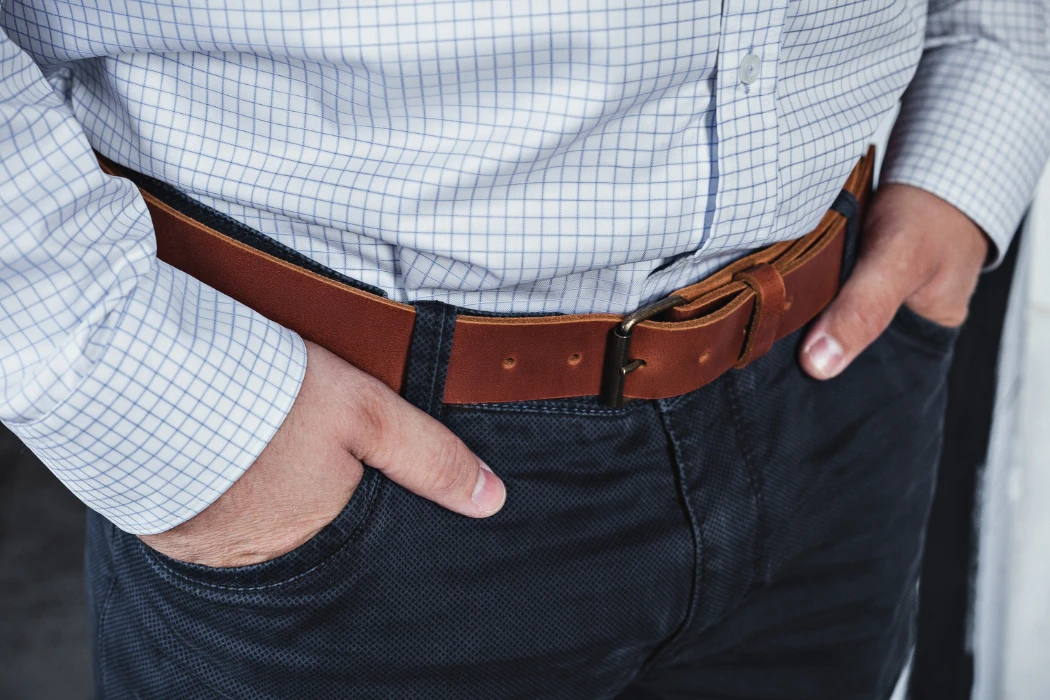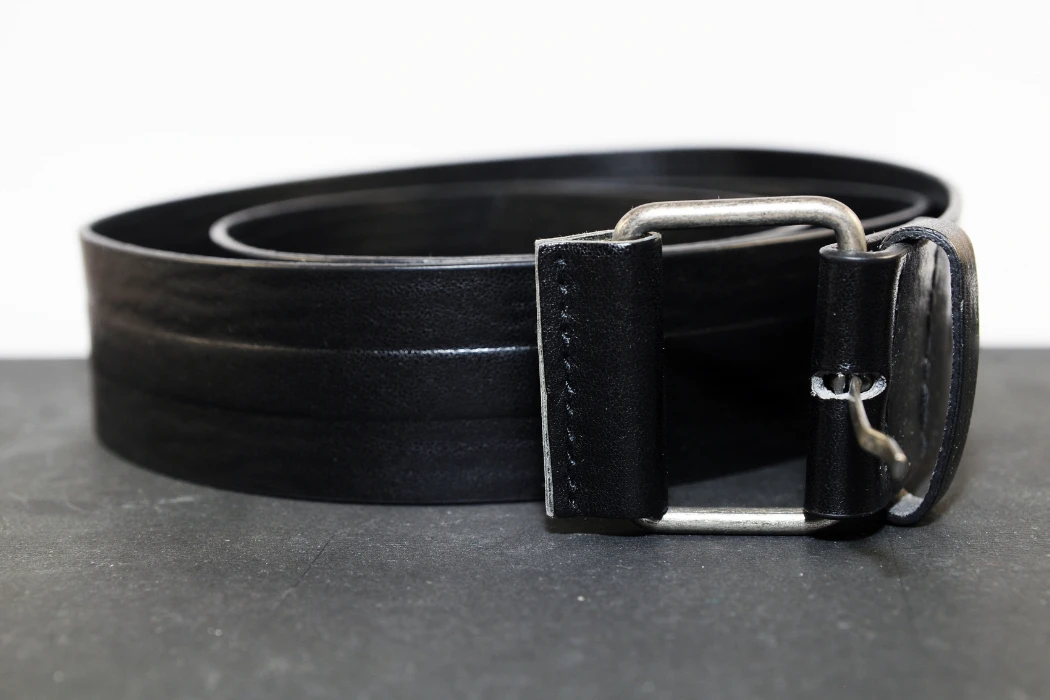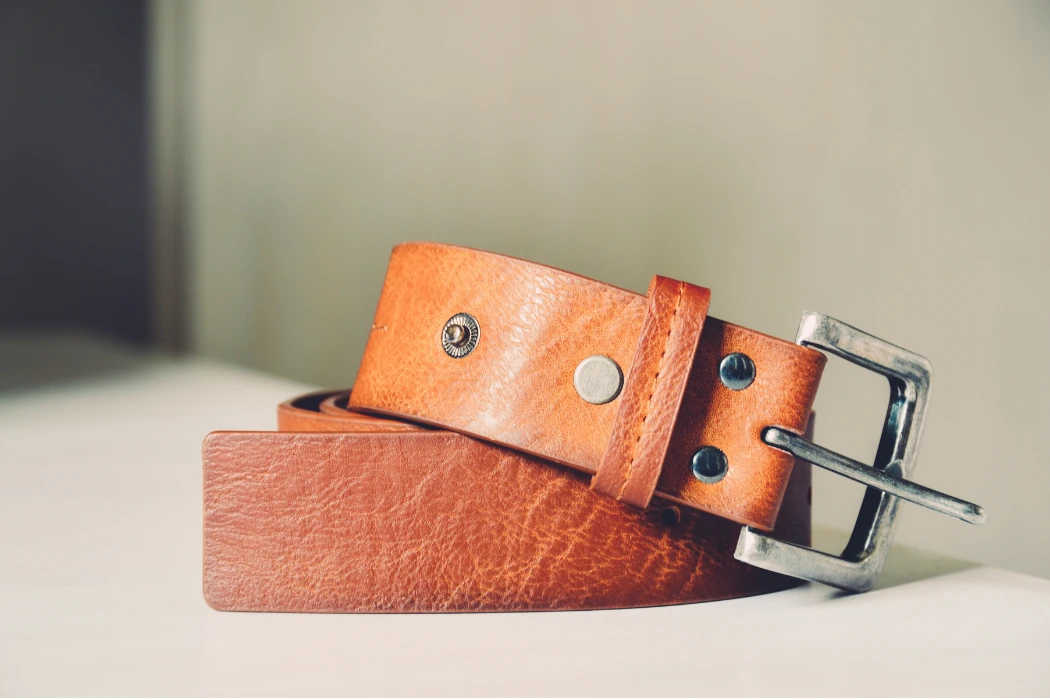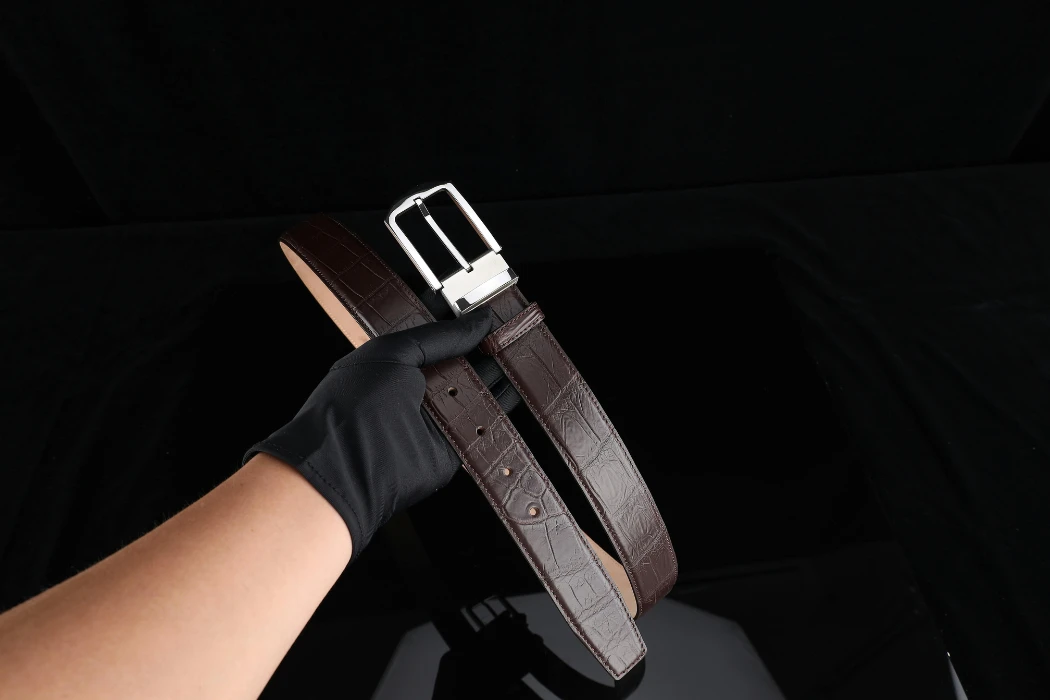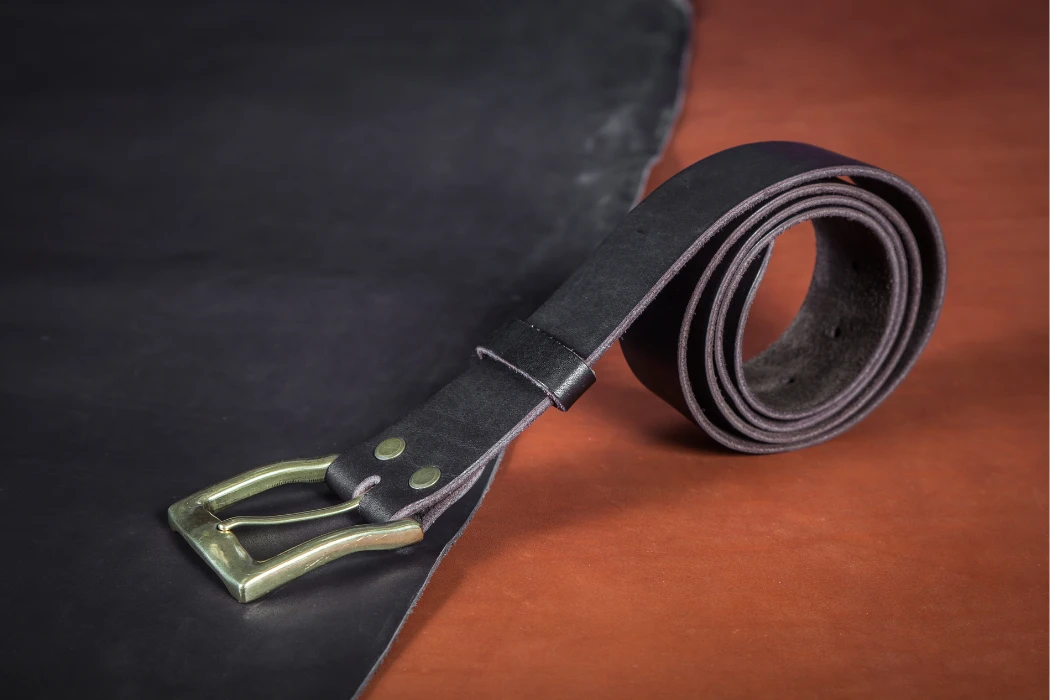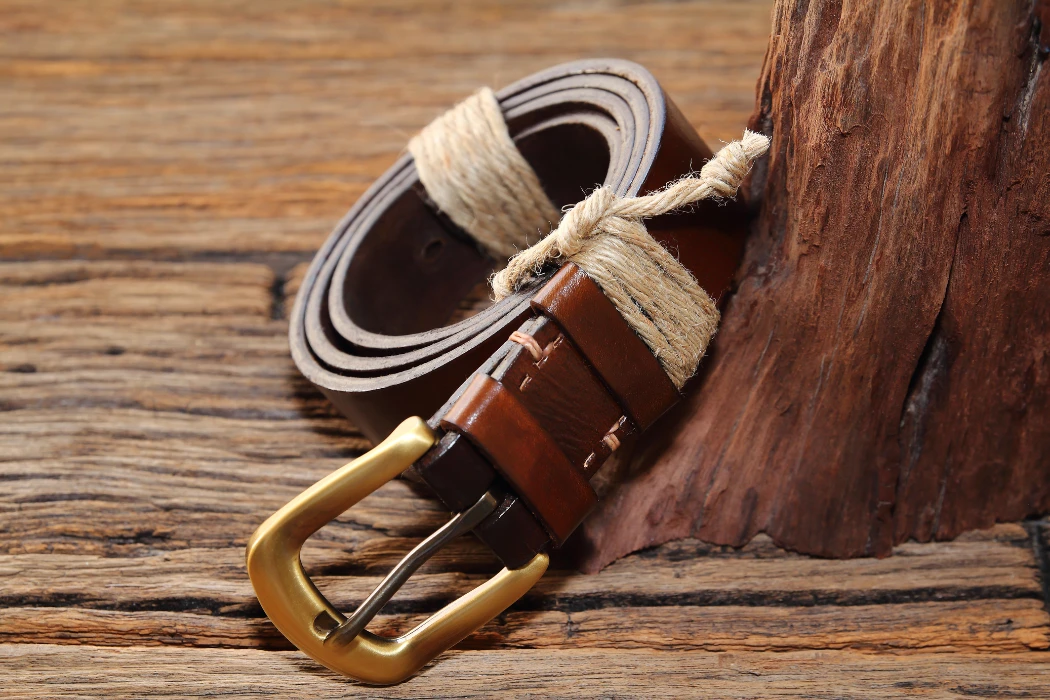
Leather belts can be categorized in two primary ways: 1. By Leather Quality & Type (e.g., full-grain vs. “genuine,” or cowhide vs. exotic); and 2. By Style & Purpose (e.g., formal dress belts vs. casual, western, or reversible belts). Understanding these types is the key to finding a belt that is both durable and stylish.
Have you ever wondered why some leather belts cost $20 and others cost $200? Why some are perfectly suited for a suit, while others only work with jeans? The answer lies in their “type”—a complex system that covers everything from the cut of the leather to the design of the buckle. This classification determines a belt’s feel, its appearance, and, most importantly, its lifespan.
This guide will take you beyond the surface to dissect every classification of a leather belt. We will reveal how different “types” impact durability, style, and price, helping you make an informed choice, whether for your personal wardrobe or your brand’s next collection.
What Are the Types of Belts by Leather Grade?
By grade, leather belts are primarily categorized into four types: Full-Grain, the strongest and most durable type, capable of lasting decades; Top-Grain, which is thinner and sanded for a refined, uniform look; “Genuine Leather,” a lower-grade split-leather that is less durable; and Bonded Leather, an aggregate of leather scraps that is the least durable of all.
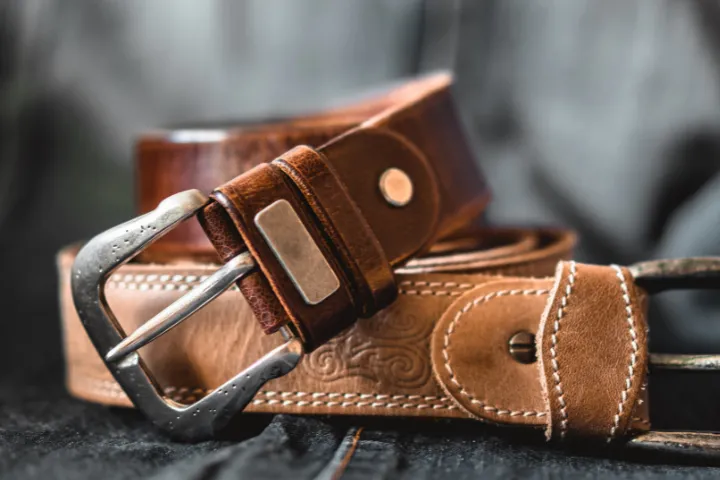
Type 1: Full-Grain Leather Belts (The 20-Year “Heritage” Type)
This is the “gold standard” and the absolute best material for a durable belt. Full-grain leather comes from the very top layer of the hide (just below the hair) and includes the entire, uncorrected grain structure. This dense, interlocking fiber matrix is what gives the leather its immense strength and character.
- Unmatched Durability: Because the grain is intact, it is the strongest and most water-resistant cut. A full-grain belt won’t crack, peel, or split. It is the only choice for a true “buy it for life” product, often lasting 15-20 years or more.
- Develops a Patina: This is its most prized feature. Full-grain leather doesn’t “wear out”; it “wears in.” Over time, it absorbs oils from your hands and sunlight, developing a rich, deep color and sheen known as a patina. This means the belt’s character actually improves with age.
This is the material used for high-end heritage brands (like Filson) and is the best answer to the query “how to choose a durable leather belt that lasts for decades.”
Type 2: Top-Grain Leather Belts (The “Polished” Dress Type)
Top-grain is the second-highest quality. It is also cut from the top layer of the hide, but with one key difference: the very top surface has been sanded, buffed, or “corrected” to remove imperfections like scars or insect bites. This makes the leather thinner and more pliable.
- Uniform Appearance: This sanding process creates a smooth, uniform, and flawless finish. This is why top-grain is the standard for formal dress belts, where a rugged, natural look is not desired.
- Durability: It is still a very strong and durable material, far superior to genuine leather, and will easily last 5-10 years. However, it will not develop a patina like full-grain, and its protective topcoat can be prone to scuffing over time.
Type 3: The “Genuine Leather” Trap (The 1-Year Failure Type)
This is one of the most deceptive and pervasive terms in the industry, directly responsible for the “full grain vs genuine” query. “Genuine Leather” does not mean “real” or “high-quality.” It is a specific, low grade of leather.
Genuine leather is typically “split leather.” The hide is split into layers, and this is the weaker, fibrous bottom layer (what suede is made from). Because it has no natural grain, it is heavily processed to look like top-grain:
- It is sprayed with a bonding agent.
- An artificial, repetitive grain pattern is embossed onto its surface with a hot plate.
- It is sealed with a thick, plastic-like layer of paint or polymer.
This material fails because it’s essentially weak fibers held together by paint. The paint is what cracks at the belt holes and folds, often in as little as 6-12 months of regular use. It will crack and peel, but it will never develop a patina.
Manufacturer’s Insight: A brand’s reputation for quality is lost here. While “Genuine Leather” has a low manufacturing cost, it has a high return rate. For B2B clients, specifying Full-Grain or Top-Grain is the single most important decision for ensuring customer satisfaction and a low defect rate (typically <1% for full-grain vs. 5-10% for genuine).
Leather Grade vs. Durability Comparison
This table breaks down the four main grades a brand or consumer will encounter.
| Leather Grade | Composition | Avg. Lifespan (Daily Use) | Best For (Style) |
|---|---|---|---|
| Full-Grain | Intact, uncorrected top layer of the hide. | 15-20+ Years | Casual, Workwear, Heritage, Durable |
| Top-Grain | Top layer, but sanded and corrected for a uniform finish. | 5-10 Years | Formal Dress Belts, Designer Belts |
| Genuine (Split) | Weaker bottom layer, painted and embossed with a fake grain. | 6-12 Months | Fast Fashion, Budget Belts (Avoid) |
| Bonded Leather | Leather dust and scraps glued together with polyurethane. | < 6 Months | Mass-Market (Avoid at all costs) |
What Are the Types of Belts by Leather Material?
By material, the most common type is Cowhide, which offers a perfect balance of durability, flexibility, and availability. For a softer, more luxurious feel, Calfskin is used in high-end dress belts. Exotic Leathers, such as alligator, caiman, and ostrich, are also distinct types, prized for their unique textures and premium price points.
Type 1: The Standard: Cowhide & Bullhide (Strength and Versatility)
When you think of a classic, durable leather belt, you are thinking of cowhide. Making up over 80% of all leather belts sold, cowhide is the industry standard for a reason: it offers the best all-around performance. It is thick, strong, and widely available, making it ideal for everything from casual jeans belts to rugged work belts. (This is the best material for simple leather belts).
- Cowhide: Typically sourced from female animals, the leather is pliable, strong, and has a versatile grain.
- Bullhide: Sourced from male animals, bullhide is noticeably thicker (often 10-14 oz), denser, and has a more pronounced, rugged grain. It’s the perfect choice for heavy-duty, “tough” belts where maximum durability is the primary goal.
Type 2: The Luxury: Calfskin (Softness & Refinement)
Calfskin is a luxury material, prized for its exceptionally soft, fine-grained, and lightweight properties. Because the animal is young, the hide is thinner (often 2-3 oz) and has a smooth, flawless surface, making it the top choice for high-end formal and designer dress belts. While it is very durable in terms of its fiber strength (it won’t split), its soft surface can be more prone to scuffs than rugged cowhide, making it a trade-off for luxury over raw toughness.
Type 3: The Exotics: Alligator, Caiman, Ostrich & Lizard
Exotic leathers are defined by their unique patterns and high cost. Manufacturing with them requires a completely different set of skills, as the scales and unique textures must be carefully cut and stitched.
- Alligator vs. Caiman: These are often confused. True American Alligator is the luxury standard, known for its soft, pliable scales and high price ($300-$500+ for a belt). Caiman (a related species) is more common and affordable. Its scales are known for being bonier and stiffer, as they contain small calcium deposits. This difference is key when comparing black and brown caiman belts.
- Ostrich: Instantly recognizable by its unique “quill” pattern (the follicles from the feathers). Ostrich leather is naturally rich in oils, making it incredibly soft, pliable, and durable against cracking.
- Lizard: Prized for its small, intricate, glossy scale pattern, lizard skin is thin but surprisingly tough. It’s often used for very sleek, formal belts.
Type 4: Specialty Treatments: Bridle & Saddle Leather
This is a critical distinction that often confuses buyers. Bridle and Saddle leather are not types of animals; they are types of finishes applied to cowhide.
This process, used for equestrian gear (like a horse’s bridle), creates some of the strongest and most durable belts in the world. It starts with a thick, full-grain vegetable-tanned cowhide, which is then hot-stuffed with waxes, oils, and tallows. This process can take weeks.
The result is a belt that is incredibly strong, weather-resistant, and stiff when new, but breaks in beautifully over time. This is the material used by brands like Filson and is the answer to the query for saddle leather belts and “durable belts that last decades.”
How Are Formal Dress Belts Different From Casual Belts?
A formal dress belt is typically narrow, between 1 inch to 1.25 inches wide, with a smooth, polished finish (often Top-Grain or Calfskin) and a small, simple frame buckle. In contrast, a casual belt is wider, usually 1.5 inches or more, made from thicker, more rugged leather (like Full-Grain or Distressed), and is designed to be paired with larger or more decorative buckles.
Features of a Formal Dress Belt (Thin, Polished, Simple)
A formal dress belt is an accessory of subtlety and refinement. Its entire design is meant to be understated and complement a suit or formal trousers. The rules for this type are strict:
- Width: The standard width is 1 inch to 1.25 inches (2.5cm – 3.2cm). Anything wider is considered casual.
- Leather: The leather must be smooth and polished. This is why Top-Grain or Calfskin is the preferred material. A rugged, full-grain texture is too informal.
- Finish: The finish is typically a high-shine or semi-gloss, not a matte, distressed, or oiled finish.
- Color: Must be a solid color, traditionally black or dark brown, to match the wearer’s dress shoes.
- Buckle: The buckle must be a small, simple, polished frame-style buckle, usually in silver or gold tones.
Features of a Casual Belt (Wide, Rugged, Versatile)
A casual belt is defined by its versatility and more substantial appearance. It is the most common type of belt, designed for jeans, chinos, and everyday wear. The rules here are flexible, but the key features are:
- Width: The standard width is 1.5 inches (3.8cm), which is the exact width of a standard jean loop. Work belts or statement belts can be even wider, up to 1.75 inches.
- Leather: This is where Full-Grain, Bridle, Saddle, and Distressed leathers shine. The material is expected to be thick (8-10 oz), durable, and show character.
- Finish: Can be anything from matte, oiled, or waxed to distressed or braided.
- Buckle: The buckle is usually larger, more rugged, and can be decorative. Plate buckles, roller buckles, and larger frame buckles are all common.
The “Plain Leather Belt”: A Versatile Classic
The “plain leather belt” is a sub-category of the casual belt and is a timeless staple. This term refers to a simple, unstitched strap of solid, full-grain leather (usually 1.5 inches wide) paired with a classic frame buckle. It has no decorative stitching or tooling. Its beauty lies in its simplicity and the quality of the leather itself. This is the belt (like those from Filson) that is praised for its durability, as it’s a single thick piece of leather that will develop a patina and last for decades. It is the perfect answer for the “durable belt that lasts” query.
Are Distressed Leather Belts Suitable for Formal Occasions?
No, a distressed leather belt is never suitable for a formal occasion. This is a common style question, and the answer is definitive. The style rules for formal and business wear are built on a clean, polished, and uniform aesthetic.
A “distressed” finish, which involves scuffs, scratches, and a non-uniform color, is the literal opposite of a formal look. It is inherently casual. Pairing a distressed belt with a tailored suit would be a significant style mismatch, much like wearing hiking boots with a tuxedo. Formal occasions require a polished Top-Grain or Calfskin dress belt that matches the shine of your dress shoes.
Manufacturer’s Insight: For brands, the distinction is critical. A formal belt must be “skived” (thinned) at the edges to be sleek, and is often built with a “stitched” construction (see H2.6). A casual “plain” belt, however, is often a single, thick 9-oz strap with “burnished” edges. They are two entirely different manufacturing processes for two different customers.
What Are the Different Styles of Casual & Themed Belts?
Casual belt styles are diverse, allowing for greater personal expression. Western Belts are a major category, defined by decorative tooling (cincelados) and large, ornate buckles. Braided Belts offer a relaxed, adjustable fit. Reversible Belts use a special twisting buckle to offer two colors in one, typically black and brown, making them a popular, versatile choice.
The Western Belt (Tooling, Stitching & Plate Buckles)
The Western belt is a distinct style defined by its rich decoration. Unlike a plain belt, the focus here is on craftsmanship and ornamentation. This category directly answers the query for cincelados (Spanish for “chiseled” or “tooled”).
- Tooling/Tooling: This is the most important feature. It refers to the intricate patterns (often floral or basket-weave) hand-carved or machine-embossed into the leather. This can only be done on thick, vegetable-tanned leather.
- Stitching: Western belts often feature contrasting, heavy-gauge decorative stitching along the edges, which adds to the style.
- Buckles: This style almost always uses a larger Plate-Style Buckle (see H2.7), which is often made of engraved silver, pewter, or zinc alloy, rather than a simple frame.
The Braided Belt (Woven & Adjustable)
The braided (or woven) leather belt is a timeless casual staple, perfect for summer wear, chinos, or golf. Its construction is entirely different from a standard belt strap.
- Construction: It’s made from multiple strands of thinner leather (or sometimes faux leather) woven together. This creates a flexible and breathable belt.
- Function: Its greatest advantage is its infinite adjustability. Because there are no pre-punched holes, the buckle’s prong can pass through any opening in the weave, allowing for a perfect fit.
- Durability: This is its main trade-off. While comfortable, the individual leather strands are thin and can be prone to stretching or breaking over time, especially if made from cheap “Genuine Leather” strips. A high-quality braided belt will use full-grain calfskin or kangaroo leather strands for better longevity.
The Reversible Belt (The 2-in-1 Design)
The reversible belt is a popular, functional type, most often sold as a dress belt. It’s designed to solve a simple problem: offering two belts in one, usually black on one side and brown on the other.
Its “type” is defined entirely by its specialized hardware and construction. It consists of two thin layers of top-grain leather (one black, one brown) stitched back-to-back. The buckle is attached to a special mechanism that can be pulled and twisted 180 degrees to flip the belt over, or the buckle itself can be detached and flipped. While very practical for travel, this construction is less durable than a solid, single-strap belt. The two thin layers are prone to delaminating (separating) over time, and the twisting buckle mechanism is a complex failure point.
Colored & Themed Belts (Beige, Camo, Boot Barn, etc.)
This category is defined by its finish rather than its construction. This is where a brand’s specific aesthetic comes to life. These belts answer queries for beige belts, brown and tan styles, or branded products you might find at retailers like Boot Barn.
The durability of a colored belt depends entirely on how it was colored:
- Drum-Dyed (High Quality): For a solid color like beige or tan, high-quality manufacturing involves “drum-dyeing.” The leather hide is tumbled in a massive drum full of dye for hours, allowing the color to penetrate all the way through. This means if the belt is scuffed, the color underneath is the same.
- Painted (Low Quality): A cheap belt is often “painted.” A standard brown leather is simply spray-painted with a beige topcoat. This paint will crack and flake off at the belt holes and folds within months.
- Printed (Themed): For complex patterns like Camo, a manufacturer uses high-definition digital UV printing to bond the pattern to the leather’s surface, a process far more durable than a simple laminate or sticker.
Retailers like Boot Barn successfully merchandise by combining these types, offering durable “plain” full-grain belts alongside highly decorative “Western” and “tooled” belts, targeting different customer styles under one roof.
Casual Belt Styles vs. Occasion
This table summarizes the most common casual types and their best use cases.
| Style / Type | Key Feature | Best Paired With |
|---|---|---|
| Plain Casual (Full-Grain) | Thick (1.5″ width), solid leather, simple buckle. | Jeans, Chinos, Workwear. The “everyday” belt. |
| Braided (Woven) | Woven texture, infinite adjustability, no holes. | Summer-weight pants, Chinos, Golf attire. |
| Western (Tooled) | Embossed/carved patterns, large plate buckle. | Jeans (especially boot-cut), Western shirts. |
| Distressed (Oiled) | “Pull-up” leather, looks aged, rugged finish. | Jeans, Casual boots, Flannel shirts. |
| Reversible (2-in-1) | Twisting buckle, two different colored sides. | Travel, Business-casual (when used as a dress belt). |
What Are the Types of Stitched Leather Belts?
Stitched leather belts fall into two main types: 1) Lined Structural Belts, where a thin top leather layer is stitched to a backing or liner, which is the standard for formal dress belts; and 2) Decorative Belts, where stitching is added to the edge of a single, thick strap for stylistic flair (common in Western or ladder-style belts). The durability of either type depends entirely on the quality of the stitch (e.g., saddle stitch vs. lockstitch).
Type 1: Lined & Stitched Dress Belts (The Formal Standard)
This is the most common type of stitched belt you’ll find. For a formal dress belt, a thick 9-oz piece of leather is too bulky and rugged. Instead, a manufacturer creates a sleeker profile by building a “sandwich.”
- Construction: A thin (2-3 oz) layer of high-quality Top-Grain or Calfskin is used for the top (the “show” side). This is then glued and stitched to a liner, which can be another piece of thin leather (like calfskin) or a quality backing material.
- Purpose: This method creates a belt that is thin, sleek, and has a clean, finished back. The stitching is structural; it is what holds the two layers together.
- Benefit: This allows for a slim, refined profile (often just 3-4mm thick) that fits perfectly with the thin loops on dress trousers.
Type 2: Decorative & Edge-Stitched Casual Belts
This type of stitched belt is built for style and ruggedness. It starts with a single, thick (8-10 oz) strap of Full-Grain leather, just like a “Plain Belt.” The stitching is then added purely for decoration, not to hold layers together.
- Western Stitching: This can be intricate patterns or a simple double-stitch running along the edge, often in a contrasting color (like white thread on brown leather) to add visual interest.
- Ladder Leather Products: This is a great example of decorative stitching. A “ladder” belt might feature parallel stitches running down the strap, with horizontal stitches connecting them at intervals, resembling a ladder. This is a stylistic choice, not a structural one.
How Stitching Affects Durability (Saddle vs. Lockstitch)
The type of stitch used is a critical quality indicator that answers how stitched leather belts are made and why some last longer than others. The thread itself is usually a durable, waxed nylon or polyester.
- Machine Lockstitch: This is the standard stitch used on 99% of manufactured goods. It’s fast and efficient, using two threads (a top needle and a bottom bobbin) that “lock” together in the middle of the leather. Its weakness: if one thread breaks (e.g., from abrasion), the “lock” is broken, and the entire seam can unravel over time.
- Hand-Stitched (Saddle Stitch): This is a traditional, time-consuming method that is significantly stronger. A single thread with two needles is passed back and forth through the same hole, creating two independent, interlocking lines of thread. If one stitch breaks, the rest of the seam remains 100% intact. It’s the mark of a truly high-end, durable wallet.
A well-made lockstitch from a high-end machine will last for years, but a hand-sewn saddle stitch is technically indestructible and is a hallmark of “buy-it-for-life” craftsmanship.
Manufacturer’s Insight (Hoplok): Manufacturing stitched belts for a brand like Calvin Klein requires balancing this quality with massive scale. Hoplok must produce over 1.5 million belts per month while maintaining a defect rate below 1%. We achieve this not by hand-stitching, but by investing in high-precision German-engineered sewing machines. These machines, operated by our 4,500 skilled artisans, create a perfectly tensioned lockstitch that is both uniform and incredibly durable, rivaling the consistency of handmade products at a scale they cannot match.
What Are the Different Types of Belt Buckles and Materials?
By mechanism, belt buckles are mainly categorized as Frame-Style (the most common), Plate-Style (common for Western or novelty buckles), and Box-Style (often used for automatic or fabric belts). By material, Solid Brass and Stainless Steel are the “buy-it-for-life” options that can last decades. The most common material, Plated Zinc Alloy, is far less durable and often breaks or wears out in 1-2 years.
Types by Mechanism: Frame, Plate, Box & Reversible
The “type” of buckle is first defined by its mechanism—how it fastens the belt.
- Frame-Style Buckle: This is the most common type, targeting the frame belt query. The buckle is a simple, open frame (square, rectangular, or oval). The prong is attached to the center bar, and it passes through the holes in the belt strap. This is the standard for nearly all formal and most casual belts.
- Plate-Style Buckle: This type is a solid, flat piece of metal (a “plate”). On the back, it has a simple hook that catches in the belt’s holes. This design is popular for truck belt buckles, large Western buckles, or any “statement” buckle where the front plate is used for a large, decorative design (like a brand logo or a raccoon).
- Box-Style Buckle: This type has no prong and is used for belts with no holes. It’s a hollow box that the belt strap passes through. A mechanism (either a “clamp” or an automatic track) clamps down on the leather, holding it in place with friction.
- Reversible Buckle: This is a sub-type of frame buckle, designed for Reversible Belts. The buckle itself is on a swivel or twist mechanism that allows it to flip 180 degrees, enabling the wearer to use either side of the belt.
Types by Material: Solid Brass vs. Stainless Steel (The “Decade” Buckles)
This is the most critical factor for durability and the main answer to queries about types of buckles for leather projects. A $200 full-grain belt with a $1 zinc buckle is a bad product. High-quality buckles are made from solid, non-plated metals.
- Solid Brass: This is the gold standard for heritage and high-end buckles. It is a dense, heavy alloy of copper and zinc. It will never rust and is too strong to ever break under normal use. Over decades, it will develop a rich, natural patina (just like the leather) but can be polished back to a bright shine. It has a satisfying “heft” or weight that signals quality.
- Stainless Steel: This is the modern equivalent to brass. It is exceptionally strong, corrosion-proof, and has a sleek, contemporary look. It is often used for high-end designer or minimalist belts where a silver-tone is desired. Like brass, it is a solid metal through-and-through, so there is no plating to chip or wear off.
Types by Material: Plated Zinc Alloy (The “Standard Failure”)
Over 90% of all belts sold in mass-market retail (and many “designer” belts) use zinc alloy buckles. This is the single biggest reason why belts fail. Zinc is a cheap, brittle “pot metal” that is easy to melt down and cast into complex shapes (like a detailed logo).
Because zinc itself is a dull grey metal, it must be “plated” with a micro-thin layer of another, shinier metal (like nickel, chrome, or brass) to look attractive. This creates two inevitable failure points:
- The Plating Fails (1-2 Years): The plating is only a few microns thick. From rubbing against desks, jeans, and car seats, this thin layer wears away, exposing the dull grey metal underneath. This often happens in 12-18 months.
- The Metal Fails (2-3 Years): Zinc alloy is brittle. The prong of the buckle, which is under constant stress, will often snap or break after 1-2 years of daily flexing. Solid brass or steel will never do this.
A “heft test” is the best way to spot it: zinc buckles feel unnaturally light and “cheap” compared to the weight of solid brass.
Novelty & Themed Buckles (Raccoon, Trucker, etc.)
This directly addresses queries for raccoon belt buckle or truck belt buckle. These highly decorative, sculpted buckles are almost exclusively made from cast metal. The quality spectrum is huge:
- Low-End (Zinc Alloy): The vast majority are mass-produced from plated zinc alloy. They are lightweight and the finish will wear off.
- High-End (Pewter or Bronze): Artisan-made buckles are often cast from solid Pewter or Bronze. Pewter is a heavy, soft metal that develops a unique dark patina. Bronze is a premium, heavy alloy similar to brass. When shopping for a novelty buckle, look for “Solid Pewter” as a sign of quality over “Zinc Alloy.”
Buckle Material vs. Durability vs. Cost
This table breaks down the critical choices for a brand developer or a discerning consumer.
| Material Type | Avg. Lifespan | Common Failure Mode | Est. Mfg. Cost (High-Volume) |
|---|---|---|---|
| Solid Brass | 50+ Years (Lifetime) | N/A (Develops a patina, which is a feature) | High ($3.00 – $7.00) |
| Stainless Steel | 50+ Years (Lifetime) | N/A (Resists scratching, does not tarnish) | High ($2.50 – $6.00) |
| Plated Zinc Alloy | 1 – 2 Years | Plating peels/flakes, metal prong snaps. | Very Low ($0.50 – $1.20) |
| Solid Pewter (Novelty) | 20+ Years | Scratches/dents (it’s a soft metal), but won’t break. | Medium ($2.00 – $4.00) |
How Do You Choose a Durable Belt That Lasts Decades?
To choose a leather belt that lasts for decades, you must look for the “Trifecta of Quality”: 1) The Leather: It must be Full-Grain (ideally Bridle or Saddle leather). 2) The Hardware: The buckle must be Solid Brass or Stainless Steel. 3) The Construction: It must be either a single, thick strap or a well-executed stitched design. Ignore the brand name and price tag; inspect these three components.
A Buyer’s Checklist: 5 Things to Look For
When you have a belt in your hands, here is the 5-step test to check for quality. This is what our Quality Assurance (QA) teams look for.
- The Leather Test (Bend it): Grab the belt and bend a section of it (grain side out). If it’s Full-Grain, it will simply ripple or show small, natural wrinkles. If it’s “Genuine Leather,” you will see the painted topcoat crackle, stretch, and look like plastic pulling apart.
- The Edge Test (Feel it): Run your fingernail along the edge. A high-quality belt will have a smooth, slick, and polished “burnished” edge (for veg-tan) or a smooth, flexible “painted” edge (for chrome-tan). A cheap belt will have a raw, fuzzy, or flaky edge that feels unfinished.
- The Hardware Test (Heft it): A Solid Brass or Stainless Steel buckle has significant weight. It feels heavy and substantial in your hand. A Zinc Alloy buckle feels light, hollow, and “cheap.” This is the easiest way to spot a corner that was cut.
- The Stitching Test (Pull it): If the belt is stitched, look at the seams. Are they straight and tight? Is the thread thick and waxed? On cheap belts, you can often see the stitching is purely decorative and not holding anything together, or the thread is thin like on a t-shirt.
- The Loop Test (Check the Keeper): Check the small “keeper loop” (or “belt loop”). On a $20 belt, this loop is often held together with a single staple, which will fail in months. On a durable belt, this loop will be secured with a permanent stitch or a solid brass rivet.
Comparing Brands: Why a Filson Belt Outlasts a Fast-Fashion Belt
This “Trifecta of Quality” is the entire business model for heritage brands like Filson, and it’s what separates them from fast-fashion or mass-market brands like those found at Boot Barn.
- Filson (Heritage Brand): Their famous belts are a perfect case study. They use Bridle Leather (a specialty-treated Full-Grain) and custom-cast Solid Brass hardware. There are no corners cut. The result is a $100 – $150 belt that reliably lasts for 10-20 years. The materials are chosen for maximum durability.
- Fast-Fashion / Mass-Market (e.g., Boot Barn): A retailer like Boot Barn serves a different customer. They sell some high-quality brands, but their in-house or entry-level belts are built for style and price. They will likely use “Genuine Leather” (the painted split) and a Plated Zinc Alloy buckle with a Western design. The belt looks the part, but it is not engineered to last. It is engineered to hit a $30-$50 retail price point.
Both are valid business models, but only one creates a durable “buy-it-for-life” product. The difference is not the logo; it’s the Bill of Materials (BOM).
What to Look for in High-Quality Chaps and Belts
This same logic applies to other high-stress leather goods, such as leather chaps (used for motorcycle riding or equestrian sports). Durability here is a matter of safety, not just style.
When evaluating chaps or heavy-duty belts, the key features are:
- Leather Type: Must be a thick, heavy-duty Full-Grain Cowhide or Bullhide (often 10-12 oz). This is non-negotiable for abrasion resistance.
- Hardware: All zippers must be oversized, heavy-duty YKK zippers (Size #8 or #10). All snaps and rivets must be rust-proof Solid Brass or Stainless Steel.
- Construction: All load-bearing seams (like where the chap attaches to the belt) must be double-stitched with heavy-gauge, nylon-bonded thread.
Manufacturer’s Insight (Hoplok): As a manufacturer for top-tier brands like J.Crew and Calvin Klein, Hoplok industrializes these heritage-quality standards. For B2B clients, we enforce this “Trifecta of Quality” at scale. We mandate LWG-certified Full-Grain leather, specify Solid Brass or Stainless Steel hardware, and use precision stitching. This focus on materials and construction is how we maintain a defect rate of less than 1% for our partners, which is a critical benchmark B2B buyers should demand from any supplier.
Frequently Asked Questions (People Also Ask)
1. What’s the difference between full-grain and genuine leather belts?
This is the most important distinction in quality. Full-Grain is the strongest, highest-quality leather from the top layer of the hide, which will last for 15-20+ years and develop a beautiful patina. “Genuine Leather” is a deceptive marketing term for a low-grade “split” leather. It’s the weaker, inner part of the hide, painted and embossed with a fake grain. It will crack, peel, and typically fail within 6-12 months of use.
2. Are stitched leather belts more durable than plain ones?
Not necessarily. Durability depends on why it’s stitched. A plain, unstitched belt made from a single, thick (9-10 oz) strap of Full-Grain leather is extremely durable. A stitched dress belt is also durable if well-made, but it’s stitched to create a thin, sleek profile. However, many cheap belts use stitching to glue a thin, fake-looking layer on top of a “Genuine Leather” or bonded core. In this case, the stitching is a sign of weakness, and the layers will delaminate and peel apart.
3. What are the best materials for making simple leather belts?
For a “simple” but durable leather belt, the best material is a Full-Grain Vegetable-Tanned Cowhide strap, approximately 8-10 oz (3.2-4.0mm) thick. This combination provides the best balance of durability, rigidity, and the ability to develop a beautiful patina over time. For the buckle, Solid Brass is the best material for a simple, long-lasting belt.
4. How do I choose a high-quality black leather belt?
When choosing a high-quality black belt, the rules are the same as for any color, but the finish is critical. For a formal black belt, look for a Top-Grain or Calfskin leather with a smooth, semi-gloss finish and a sleek, stitched construction. For a casual black belt, look for a Full-Grain, drum-dyed leather. “Drum-dyed” means the color is all the way through, so if it gets scuffed, it will still be black underneath, unlike a cheap, “painted” belt that will show a grey or tan color when scratched.
5. What are the best materials for durable belt loops?
The “keeper loop” is a common failure point. The best material is a strip of the same Full-Grain or Top-Grain leather used for the belt itself. On a high-quality belt, this loop is not stapled. It is either secured with a permanent saddle stitch (the best method) or a discreet, heavy-duty brass rivet. A cheap belt uses a single, thin staple that will rust or pull out within months.
6. Are distressed leather belts suitable for formal occasions?
No, absolutely not. Formal wear (like a suit or tuxedo) requires a clean, polished, and minimalist aesthetic. A “distressed” belt, which is designed to look rugged, aged, and scuffed, is the complete opposite of this. It is a strictly casual belt style. For a formal occasion, you must wear a smooth, polished Top-Grain or Calfskin belt (usually black or dark brown) with a simple, polished frame buckle.
7. What is the difference between a caiman belt and an alligator belt?
Both are exotic reptile leathers, but they differ significantly in quality, feel, and price. American Alligator is the luxury standard; its hide is soft, flexible, and has a smooth, desirable scale pattern, making it very expensive ($300-$500+). Caiman is a related species from South America. Its hide is much bonier and stiffer due to small calcium deposits in the scales. This makes it less flexible and more prone to cracking over time, which is why it is a much more affordable alternative to true alligator.
Conclusion: A Belt Type for Every Brand and Occasion
As we’ve explored, there is no single answer to “what types of leather belts are there?” A belt is a complete system, and its “type” is a combination of choices. It’s a system defined by its leather grade (which determines its lifespan), its construction (which determines its style), and its hardware (which determines its durability). A belt isn’t just a belt; it’s a specific solution to a specific need.
From a 10-oz full-grain, brass-buckled work belt designed to last for 30 years, to a sleek, calfskin stitched dress belt designed for a boardroom, to a casual braided belt for a summer outfit—each “type” is a different product, built for a different purpose. Understanding these differences is the key to appreciating quality and making an informed choice.
As a brand, your success depends on matching the right type of belt to your target customer. Selling a rugged, distressed belt to a business-suit customer will fail. Selling a cheap, “Genuine Leather” belt to a customer seeking durability will result in a product return within 12 months and a lost customer for life. The manufacturing choices you make are your brand’s reputation.
Hoplok is a master manufacturer of all these types. We don’t just assemble parts; we control the entire quality system. We produce for top-tier brands like Calvin Klein and J.Crew, and we run our own ProPelli leather finishing facility to ensure material quality from the source. With our ISO 9001-certified factories in China and Cambodia (producing 1.5 million belts per month) and our US-based design teams, we have the expertise and the scale to help you design and produce every single type of belt discussed in this guide.
Contact Hoplok Leather to start building your custom belt collection—one that is perfectly engineered for your specific customer and built to last.