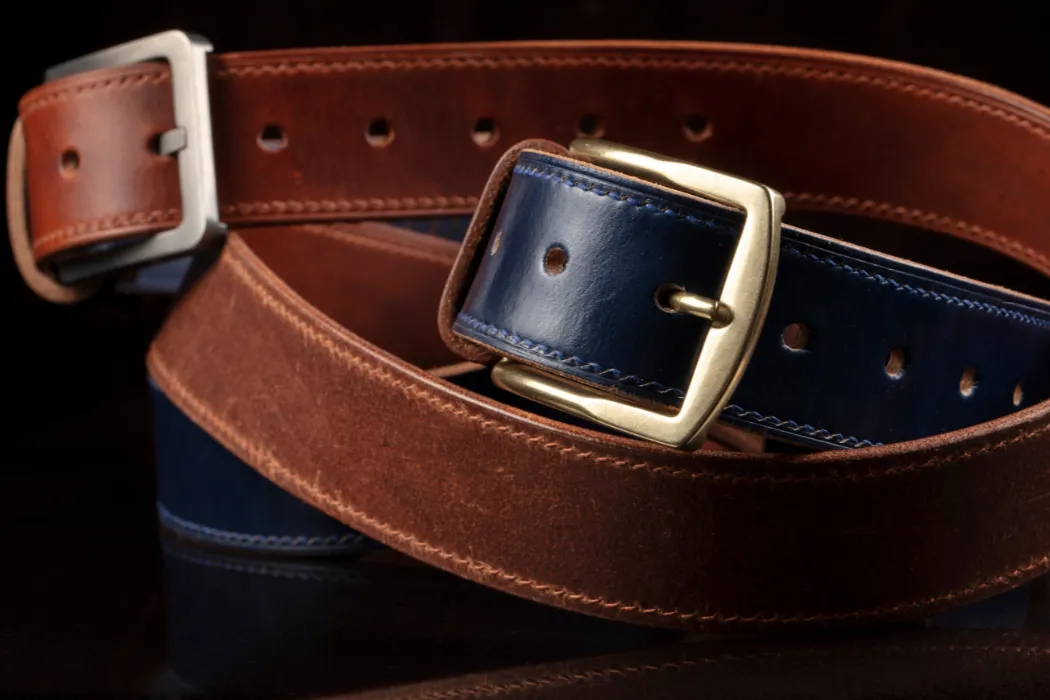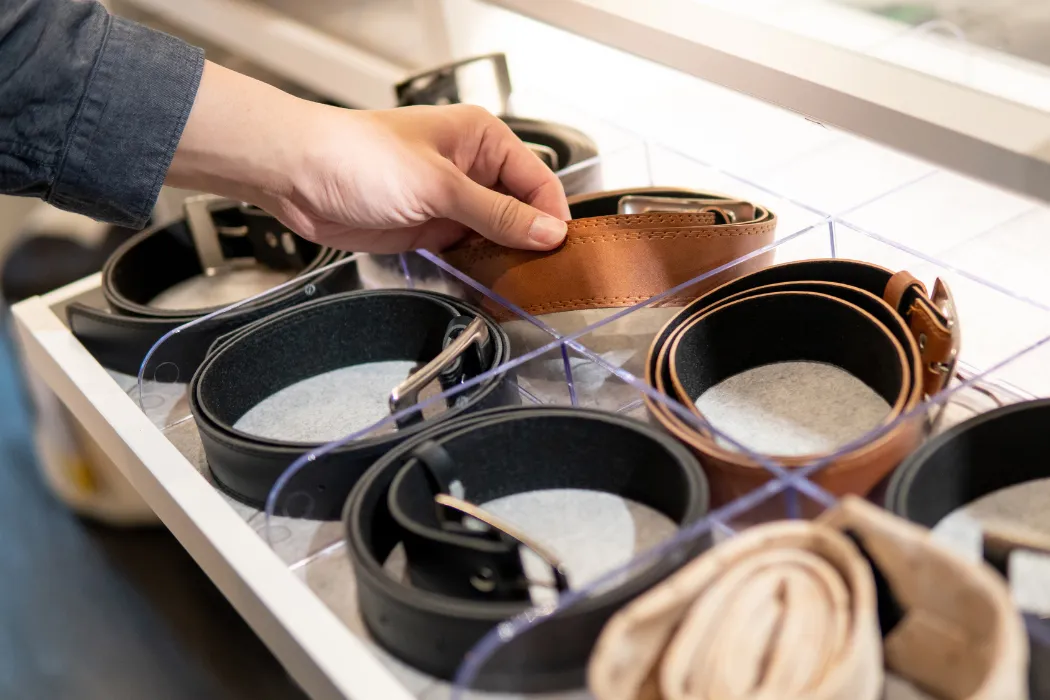
In a market increasingly shaped by sustainability benchmarks and supply chain transparency, understanding the specifications behind Vegetable Tanned Leather Belts has become essential for B2B buyers and manufacturers. Unlike chrome-tanned leather, which completes within a day, vegetable tanning takes 6–8 weeks or longer—producing denser, moldable leather that meets ES 6817:2021 mechanical benchmarks such as a shrinkage temperature ≥ 70 °C. For brands sourcing high‑end belts and saddlery materials, knowing these details means securing products compliant with international durability and environmental standards.
This article explores the full context of vegetable‑tanned craftsmanship in 2026—from its technical foundations and compliance data to patina formation, sustainability factors, and pricing structures. You’ll learn how phenolic tannins derived from oak and chestnut create firm, shape‑retaining belts, why chromium‑free processes remain the ecological benchmark, and how regulatory frameworks like ISO 4045 and ASTM D2876 define performance for professional buyers in the leather industry.
What Exactly is Vegetable Tanned Leather?
Vegetable tanned leather is made by stabilizing animal hides using phenolic tannins extracted from plants instead of chromium salts. The process produces firm, moldable leather ideal for belts, saddlery, and artisan goods, conforming to strict international specifications and environmental standards.

Understanding the Nature and Origins of Vegetable Tanned Leather
Vegetable tanning is the most traditional and natural leather tanning process. It utilizes phenolic compounds extracted from plants—collectively termed tannins—to stabilize the collagen fibers in animal hides. Instead of relying on mineral salts such as chromium, these plant-derived materials build body, density, and rigidity into the leather structure.
- Vegetable tanning uses phenolic plant materials (tannins and syntans) to stabilize collagen fibers instead of mineral salts like chrome.
- Defined by ES 6817:2021, it is the traditional method used for firm leather types such as belts, saddlery, and harnesses.
- Tanning liquors operate around pH 3.8–4.2, achieving body, firmness, and moldability ideal for heavy-duty leather goods.
- EU and EPA documentation describe it as building fullness and shape retention without relying on synthetic tanning agents.
In environmental and technical language, vegetable tanning is categorized as a process that yields firm, moldable leather without resorting to synthetic tanning agents or chromium compounds. Its origins lie in ancient craftsmanship where bark extracts and leaves were used to preserve hides—an approach that today aligns with sustainable and low-impact manufacturing philosophies.
Technical Standards, Specifications, and Industry Compliance
Modern vegetable tanned leathers are tightly regulated through national and international standards frameworks. These define key performance indicators such as shrinkage temperature, degree of tannage, and thresholds for chemical residue. Compliance ensures that the resulting material maintains both durability and environmental safety.
- Complies with ES 6817:2021 requirements: shrinkage temperature ≥ 70 °C (ES ISO 3380) and degree of tannage ≥ 50 (ES 1194).
- Chemical limits include total ash ≤ 3.5 %, loss by washing ≤ 8 %, and pH difference figure ≤ 0.7 (ES ISO 4045).
- Must be chromium-free (Cr(VI) ≤ 3 mg/kg per ES ISO 17075) and meet azo dye limits (ES ISO 17234).
- Typical certifications: UNI 10885, UNI EN ISO 15987 (Italian consortium specification); ASTM D2876, D4831, D4786 for testing physical properties like buckle tear and water‑soluble matter.
- EU BAT classifies vegetable tanned leather as best suited for belts, soles, saddles, and molded goods requiring stiffness and durability.
Across jurisdictions, these parameters protect product integrity and consumer health. For instance, the Italian Genuine Vegetable Tanned Leather Consortium restricts production to Tuscany, enforcing UNI and ISO conformity with additional proprietary tests. In global trade, ASTM and ISO standards form the reference framework for testing tensile strength, buckle tear, and water‑soluble matter—factors that determine mechanical reliability for belts and saddlery.
In essence, vegetable tanned leather is not simply an “old method” revived; it is a data‑driven material classification defined by environmental compliance, mechanical performance, and traceable authenticity, giving it lasting value in both artisanal and industrial applications.
How Does the Tanning Process Differ from Chrome?
Vegetable tanning relies on natural tannins from plants and takes weeks or months, while chrome tanning uses chromium(III) salts and completes in about a day. These distinct processes create different leather behaviors—veg-tan is firmer and moldable, chrome-tan is softer and more water-resistant.
| Aspect | Vegetable Tanning | Chrome Tanning |
|---|---|---|
| Primary Agents | Polyphenolic tannins from oak, chestnut, willow, birch; sometimes with natural oils. | Chromium(III) salts, mainly chromium sulphate, forming wet-blue hides. |
| Processing Time | Several weeks to 14–15 months through multiple baths. | Roughly one day from raw pelt to wet-blue leather. |
| Resulting Character | Firmer, moldable, suitable for tooling and forming. | Softer, flexible, and more resistant to moisture. |
Fundamental Chemical and Process Differences
At their core, vegetable and chrome tanning rely on entirely different chemistry and mechanisms of collagen fixation. The vegetable process depends on plant-based tannins—polyphenolic compounds found in oak, chestnut, willow, and birch bark—to cross-link proteins over time. Chrome tanning employs chromium(III) salts, typically chromium sulphate, which create the characteristic blue-toned “wet-blue” hides once penetrated and fixed.
- Vegetable tanning uses polyphenolic plant tannins from oak, chestnut, willow, and birch bark, often with oils like fish oil.
- Chrome tanning uses chromium(III) salts, primarily chromium sulphate, producing ‘wet-blue’ hides.
- Veg tanning progresses through multiple baths of increasing tannin concentration over weeks to months; chrome tanning finishes within about one day via acid pickling and chrome liquor drum runs.
- Vegetable tanning operates at neutral to slightly acidic pH in pits, while chrome tanning manages a low pH acid pickling stage for chromium fixation.
The two systems therefore differ not only in timescale but also in their equipment: vegetable tanning is typically conducted in large masonry or wooden pits, allowing slow and even diffusion, while chrome tanning happens rapidly in rotating drums that enhance penetration. These chemical and mechanical contrasts shape the ultimate tactile and visual differences between leathers.
Performance, Timeframe, and Environmental Impact
Beyond chemistry, the two approaches diverge sharply in time commitment, end behavior, and ecological footprint. Vegetable tanning emphasizes patience and material purity, while chrome tanning prioritizes speed and consistent flexibility.
- Process time: vegetable tanning can take from several weeks to up to 14–15 months; chrome tanning typically completes in 1–2 days.
- Veg-tanned leather is stiffer, moldable, and excellent for belt tooling; chrome-tanned leather is softer and more flexible.
- In a burn test, veg-tan yields white or gray ash, while chrome-tan leaves greenish ash from chromium compounds.
- Vegetable tanning uses biodegradable plant liquors, whereas chrome tanning effluents contain inorganic chromium salts requiring treatment.
- About 90% of global leather production is chrome-tanned due to its speed and cost efficiency.
From an environmental engineering standpoint, vegetable tanning’s reliance on renewable bark extracts makes it relatively eco-compatible, though slower and costlier. Chrome tanning’s advantage in productivity—enabling roughly 90% of all global leather output—comes with the challenge of managing chromium-containing effluents. Each method’s resulting leather lends itself to specific end uses: firm, sculptable strap leather from vegetable tanning versus soft, durable, and water-friendly leather from chrome tanning.
Why Does Veg-Tan Develop a Patina?
Vegetable‑tanned leather forms a patina because its surface remains chemically active with natural tannins and oils that oxidize under light, oxygen, and contact. These reactions deepen color and enhance sheen as the open leather grain absorbs oils and experiences micro‑burnishing during daily use.
Natural Tannins and Oxidation: The Chemistry Behind Patina
Vegetable tanning infuses hides with polyphenolic tannins derived from tree bark, leaves, and fruits. These compounds bond to the collagen matrix but remain chemically reactive, meaning they continue to interact with environmental factors such as oxygen and ultraviolet light long after tanning is complete.
- Polyphenolic vegetable tannins remain in the collagen matrix and continue to react with oxygen and light, causing gradual darkening.
- Patina represents oxidation and photochemical changes in tannins and fats, leading to warmer brown color tones.
- Research by H. Özgunay (Ege University) confirmed all vegetable‑tanned leathers darken with light exposure, differing by tannage type.
Effectively, the transformation we see as patina is a slow shift in the chromophores inside the leather—a mixture of oxidation and UV-driven reactions that deepen the hue and reveal warm undertones typical of aged vegetable‑tanned goods.
Environmental and Mechanical Factors Driving Patina Formation
While chemistry lays the foundation, daily environmental and mechanical influences actively sculpt the patina’s appearance. These factors turn a pale, almost blonde leather into a richly nuanced surface with gloss and character.
- Key factors include heat, UV exposure, skin oils, moisture, and abrasion that mobilize oils and compress leather fibers.
- Full‑grain veg‑tan surfaces absorb oils and dirt, enhancing reflectivity through micro‑burnishing.
- Uncoated leathers such as Ecopell “Antique” vegetable‑tanned pull‑up (1.3–1.5 mm thickness) are designed for pronounced patina.
- Undyed natural veg‑tan starts tanish‑blonde and ages to medium–dark brown as oxidation progresses.
Over time, skin contact, sunlight, temperature shifts, and friction all work together to drive oil migration and surface polishing. The outcome is a tactile sheen sometimes referred to as the leather’s “glow.” Mechanical compression from bending and usage subtly smooths the grain, while oxidation beneath enriches the tone, resulting in a depth of color unique to every wearer.
Research Summary and Key Data Insights
Scientific and industrial studies provide a strong foundation for understanding patina as an intrinsic material response rather than a cosmetic effect. Key data points highlight the roles of tannins, fats, and open-grain structure in enabling the evolution of color and gloss.
- Vegetable‑tanned leather is stabilized with natural tannins that continue reacting with oxygen and light, driving patina formation.
- Patina corresponds to measurable increases in color depth and surface sheen due to oxidation between collagen, tannins, and fats.
- Environmental influences—heat, UV, oils, moisture, and abrasion—dictate the rate and intensity of these surface transformations.
- Full‑grain vegetable‑tanned leathers are most reactive because they retain open pores and minimal coatings, allowing oxidation and oil absorption.
- Studies by H. Özgunay (Ege University) demonstrated that all vegetable‑tanned leathers darken under light, confirming an inherent material property.
The combination of photochemical and mechanical processes—supported by research and industry observation—establishes that a veg‑tan patina is both predictable and desirable. It tells the story of exposure, movement, and time, reflecting its use rather than concealing it.
Industry Examples and References
- Ecopell – “Antique” vegetable‑tanned pull‑up leather: German cowhide, 4.5–6.0 m² per hide, 1.3–1.5 mm thickness. Engineered for visible ageing and patina formation.
- International Leather Club: Summarizes research by H. Özgunay (Ege University) on light‑induced darkening effects.
- Elizo: Outlines the relationship between oxidation, oil migration, and light in patina emergence.
- Von Baer: Identifies environmental variables affecting patina formation and contrasts veg‑tan with chrome‑tanned leathers.
- Buyleatheronline: Defines vegetable‑tanned types as showing “classic, profound” patina development, distinct from chrome finishes.
Craft Custom Leather Belts That Elevate Your Brand
How to Distinguish Veg-Tan from Other Leathers?
Vegetable-tanned leather can be recognized by its warm tan color, woody scent, firm body, and clean burnished edge. Unlike chrome leather, it lacks a bluish core, reacts strongly to boiling water, and holds sharp stamped impressions after drying.
Visual, Tactile, and Olfactory Cues
To differentiate vegetable-tanned (veg-tan) leather from chrome-tanned alternatives, you can rely on three intuitive identifiers: what it looks like, how it feels, and how it smells. These sensory cues remain some of the most reliable non-destructive checks for artisans and belt makers alike.
- Veg-tan shows a natural light tan to brown cross-section without grey-blue core; chrome-tan often has a pearl-grey or blue core when cut.
- The scent of veg-tan is woody and organic from plant tannins, while chrome-tan smells synthetic or chemical.
- Veg-tan feels firmer and heavier; chrome-tan is softer and more pliable, used for garments and upholstery.
- Edges of veg-tan can be naturally burnished; chrome-tan typically needs acrylic paint that may crack over time.
Practical and Technical Identification Tests
Beyond sight and touch, a range of practical shop and laboratory tests confirm the leather’s tanning type. These methods highlight how the internal fiber structure and physical response of veg‑tan differ from chrome-tan under stress, moisture, and heat.
- When wetted and stamped, veg-tan retains sharp impressions after drying; chrome-tan leaves soft marks.
- In boiling water, genuine veg-tan curls and shrinks immediately; chrome-tan does not react as strongly.
- At 100% relative humidity, veg-tan absorbs about 35.2 parts water per 100 dry parts, compared to 52 parts for chrome-tan, showing a denser structure.
- National Bureau of Standards tests showed veg-tan leather is thicker and heavier per area than chrome-tan from the same hide, reflecting fuller fiber morphology.
From an engineering and materials standpoint, vegetable‑tanned leather stands apart through its fuller fiber structure, lower moisture absorption rate, and greater density. When the same hide is processed both ways, the veg‑tan portion invariably comes out thicker, heavier, and stiffer, while the chrome‑tan half remains thinner with a more open fiber network. This explains why chrome‑tan leathers often require added filling materials to match veg‑tan’s inherent firmness and substance.
Moisture‑uptake measurements reinforce these differences: chrome leather absorbs about 52 parts water per 100 parts dry leather under 100% relative humidity, while veg‑tan absorbs about 35.2. Despite veg‑tan’s natural ability to develop patina, it actually takes up less water by weight, revealing a denser internal structure. This same density gives it superior tooling quality—the capacity to hold crisp carved or stamped impressions after drying, a quality essential for molded sheaths, holsters, and belts.
In everyday workshop identification, makers often begin by checking the cut edge: undyed or light chrome‑tan reveals a grey‑blue or white core, while veg‑tan appears uniformly tan through its thickness. The smell test is just as telling—plant tannins emit a distinct woody aroma compared with the chemical odor of chrome‑tan. Tactilely, veg‑tan starts stiff and substantial but softens with wear, while chrome‑tan feels supple from the start. The edge finishing method reinforces the conclusion: clean hand-burnished edges point to veg‑tan; acrylic-painted edges that later crack suggest chrome‑tan.
Because of these combined features, veg‑tan dominates products demanding structure and form—saddlery, holsters, and heavy belts—while chrome‑tan remains suited to flexible items like garments, upholstery, and casual carry goods.
Key Technical Data and Industry References
Multiple industrial sources confirm the measurable and visual contrasts between veg‑tan and chrome‑tan leathers:
- National Bureau of Standards (NBS): The agency’s comparative studies on sole leather durability and microstructure remain foundational for understanding veg‑tan’s density advantage.
- Realeather: Provides contemporary technical parameters and handling data for veg‑tan strap leathers used in belt manufacturing.
- Leather Naturally: Offers educational insights into tanning systems, tannin compositions, and their impact on fiber morphology and performance.
Is Veg-Tan Leather More Sustainable?
Vegetable-tanned leather uses plant-derived tannins and renewable energy processes that reduce chemical pollution, but its total carbon and water footprint remain high due to upstream livestock impacts. Its traceability and durability make it relatively more ethical rather than truly low-impact.
Environmental and Ethical Dimensions of Vegetable Tanning
Vegetable tanning distinguishes itself through the use of natural tannins derived from organic sources such as oak, chestnut, and other tree barks, fruits, and leaves. This method minimizes toxicity in water effluents compared to chrome tanning, which often introduces chromium salts into wastewater. The approach aligns with renewable and circular economy principles increasingly demanded by ethical production standards.
- Uses natural tannins extracted from oak, chestnut, tree bark, leaves, and fruits instead of chromium salts, minimizing water toxicity.
- Select tanneries employ 90% renewable energy and comply with ISO 26000 social responsibility standards.
- Consorzio Vera Pelle Italiana Conciata al Vegetale in Tuscany runs circular systems converting waste into raw materials.
- Ensures PEFC Chain of Custody-certified materials and nickel-free, biodegradable processing effluents.
Collectively, these initiatives create a stronger traceability framework, ensuring that vegetation-derived tanning aligns with the European environmental protection ethos. The Tuscany-based consortium’s centralized systems illustrate how industrial heritage can evolve toward modern ecological compliance while maintaining artisanal quality.
Lifecycle Impact and Quantitative Sustainability Data
Despite clear environmental intent, lifecycle assessments reveal that vegetable tanning’s footprint remains heavily influenced by livestock production. When measured quantitatively, both vegetable-tanned and chrome-tanned leathers demonstrate relatively similar overall impacts, with most emissions originating from the raw hide stage.
- Measured leather footprint averages 110kg CO2e/m² versus 15.8kg CO2e/m² for synthetic leather.
- Water use per pair of leather boots equals approximately 323 showers, with most impact from livestock, not tanning.
- Vegetable tanning can achieve up to 95% plant-based inputs, but longer processing can offset energy gains.
- Durability and patina development extend usable life, indirectly enhancing sustainability through reduced replacement waste.
These values emphasize how the tanning method constitutes only a small segment of the full ecological story. The durability and longevity of vegetable-tanned leather mitigate replacement cycles, thereby offering long-term reductions in resource consumption. However, its high baseline carbon and water inputs indicate that future improvements may depend less on tanning chemistry and more on upstream livestock and hide sourcing reforms.
Research Synthesis and Certification Context
Empirical research reinforces these trends:
- Carbon footprint: 110kg CO2e/m² for cow skin leather versus 15.8kg CO2e/m² for synthetics.
- Water footprint equivalent to 323 showers for a pair of leather boots.
- Energy use: 90% renewable energy in select facilities; up to 95% plant-derived tanning inputs.
- Certifications: ISO 26000, PEFC Chain of Custody, and Consortium auditing protocols for Genuine Italian Vegetable Tanned Leather.
Collectively, these systems support a framework of traceable, socially responsible, and renewable production rooted in historical craft but oriented toward modern sustainability goals. Nevertheless, while ethical practices have improved, the numerical footprint underscores the need for holistic supply chain innovation beyond the tannery walls.
How to Achieve a Glassy Burnished Edge?
A glassy burnished edge is created by progressively sanding and polishing the leather’s edge with fine grits, applying agents like Tokonole or gum tragacanth, and using friction tools to compress fibers and raise a reflective sheen that seals the surface.
Understanding the Burnishing Principle
Burnishing is the process of transforming the rough, fibrous edge of vegetable tanned leather into a sealed, polished surface through controlled friction and heat. As pressure and movement compact the fibers, micro-level compression aligns and seals them, decreasing porosity and promoting gloss formation.
The resulting glassy finish not only enhances the tactile smoothness and visual appeal of a leather belt but also acts as a moisture barrier. The combination of natural oils, burnishing agents, and friction forms a sealed layer that resists fraying, ensuring both durability and aesthetic refinement.
Step-by-Step Process for a Mirror Finish
The technical process behind achieving a high-gloss, mirror-like edge involves incremental refinement using abrasives, polishing agents, and friction-based sealing methods. Each layer is developed through precision and patience.
- Begin by sanding the edge using a grit progression from 120 up to 12000 Micro Mesh. This sequence gradually refines the surface, removing coarse irregularities before polishing compounds are applied.
- After initial smoothing, apply a thin coat of a burnishing agent such as Tokonole or gum tragacanth. Allow it to become slightly tacky for 30–60 seconds to deepen fiber absorption.
- Using a wooden slicker, bone tool, or agate stone, burnish each section in back-and-forth strokes for 30–45 minutes. Gentle heat from friction activates natural oils, producing a subtle, tacky sound that signals compaction.
- Repeat cycles of sanding, reapplying the agent, and burnishing until the surface reveals a deep luster. The final step is to buff the edge with a dry canvas or cloth to elevate the gloss into a reflective finish.
Professionals often dye the edge before final burnishing, as sealing agents like gum tragacanth lock pigments into the fiber network. The process demands patience but rewards the craftsman with a sleek, mirror-like perimeter that accentuates the mastery of vegetable tanned leatherwork.
Research Insights and Data Summary
Research into artisanal methods reveals consistent variables influencing a proper burnish. The refinement follows the grit hierarchy below, incorporating friction cycles and fiber sealing agents that contribute to the final glassy effect.
- Sandpaper grit sequence: 120, 220, 320, 400, 600, 800, 1000, 1200, 1500, 2000, 3000, 3200 Micro Mesh, 3400 Micro Mesh, 3600 Micro Mesh, 4000 Micro Mesh, 6000 Micro Mesh, 8000 Micro Mesh, up to 12000 Micro Mesh.
- Preferred agents: Tokonole, gum tragacanth, water, beeswax, and saddle soap.
- Common tools: Wooden, bone, or agate burnishers, edge bevelers, and canvas for polishing.
- Time range: Initial smoothing may take several minutes per section, but full mirror polish often requires up to 45 minutes for a belt-length edge.
- Indicators of success: a faint tacky sound during friction and an even, glossy reflection when tilted under light.
No formal ASTM or ISO standards have been recorded for this craft; the practice remains rooted in empirical hand-finishing traditions passed down through artisan workshops, emphasizing tactile precision and surface aesthetics over quantifiable engineering data.
How to Care for Vegetable Tanned Belts?
Vegetable‑tanned belts last decades with proper upkeep. Gentle cleaning, weekly conditioning with natural oils or waxes, and careful moisture control preserve flexibility and prevent cracking. Avoid water, store in moderate humidity, and allow 20–48 hours drying time after treatments for best longevity.
Cleaning and Conditioning Routine for Veg‑Tan Belts
Vegetable‑tanned leather thrives on gentle maintenance that respects its natural fibers. Cleaning should remove dust and grime without stripping oils, while conditioning replenishes the lubrication that keeps the hide supple.
- Wipe surfaces with a lightly dampened, lint‑free cotton cloth using distilled water; avoid soaking.
- Allow 20 minutes of air drying before applying a thin layer of neatsfoot oil, olive oil, or dedicated leather balm.
- Weekly conditioning and occasional beeswax or Otter Wax salve application maintain flexibility and visual depth.
- Work oils and waxes in with a natural‑bristle (horsehair) brush, using circular motions until the surface sheen subsides.
These motions distribute heat and friction evenly, helping the oils penetrate. The leather should never feel greasy after treatment—if it does, simply buff lightly with a soft cloth to restore a matte finish.
Storage, Moisture Control, and Longevity Expectations
Environmental control is critical for vegetable‑tanned leather. Unlike chrome‑tanned hides, this organic material reacts quickly to moisture and temperature swings. Proper storage and cautious drying routines extend its lifespan dramatically.
- Avoid water exposure, especially during the first month when the surface remains open‑pored and highly absorbent.
- Store belts in moderate humidity, away from direct sunlight or heat sources that can stiffen the collagen fibers.
- After wax or conditioner application, allow up to 48 hours of drying time before reuse for uniform absorption and finish.
- With consistent care, full‑grain belts of 3.5–4.5 mm thickness often remain functional and visually appealing for 20–25 years—or even a lifetime.
In essence, longevity depends less on complex treatments and more on respect for the leather’s natural limits: keep moisture balanced, replenish oils regularly, and store the belt in an environment that mirrors the comfort of human skin—neither too dry nor too humid.
Pricing: Why is Veg-Tan More Expensive?
Vegetable-tanned leather is costlier because its tanning cycle is far longer—taking six to eight weeks or more—requiring higher labor input and cleaner, larger hides. Limited global tanning capacity and its superior structural strength further raise costs compared with chrome-tanned leather.
| Factor | Vegetable-Tanned Leather | Chrome-Tanned Leather |
|---|---|---|
| Tanning Time | 6–8 weeks (may extend to months) | A few days |
| Material Selection | Only largest, cleanest bovine hides (~$290 per side) | Broader selection, more defect-tolerant hides |
| Structural Characteristics | Compact, strong fiber network; ideal for belts and saddlery | Softer, more flexible but less dimensionally stable |
Time, Labor, and Quality Inputs Drive Up Costs
The price premium for vegetable-tanned leather begins with the process itself. Whereas chrome tanning runs in days, veg-tanning takes six to eight weeks at U.S. belt tanneries, with hides soaking for extended periods in bark liquor. This sheer duration ties up both equipment and capital, making it a slower, costlier production method.
- Vegetable tanning usually runs 6–8 weeks at U.S. belt tanneries, versus only a few days for chrome tanning—an extended process that ties up equipment and capital.
- Tanneries must select only the largest, cleanest bovine hides, increasing raw material costs, with premium sides selling for about $290 each.
Because only the best hides can withstand months of processing without defect, raw material selection further inflates cost. These premium hides, combined with longer vat cycles and high labor intensity, set vegetable-tanned leather apart from quicker chrome methods in both price and character.
Structural Performance and Limited Supply Add Value
Beyond production cost, vegetable-tanned leather brings performance advantages that justify its premium. The tanning compounds cause collagen fibers to swell and compact, yielding a dense, resilient structure. This makes it the leather of choice for belts, harnesses, saddlery, and other goods demanding dimensional stability and longevity.
- Vegetable tanning compacts collagen fibers, producing strong, shape-retaining leather ideal for belts, harnesses, and saddlery—materials expected to last decades, with some rated for 50 years of wear.
- Limited supply capacity—only two large U.S. tanneries, Wickett & Craig® and Hermann Oak®—and specialized vat infrastructure contribute to premium pricing over common chrome leather.
This scarcity compounds the cost factor. With only a handful of tanneries worldwide maintaining full vegetable tanning capacity, the balance of supply and demand naturally drives higher prices. For artisans and manufacturers, what they gain in return is the assurance of structural integrity, beauty, and potentially decades-long service life.
Final Thoughts
Vegetable-tanned leather remains the benchmark for traditional craftsmanship and sustainable luxury in 2026. Its enduring appeal lies in its heritage production process—slow, natural, and deeply linked to both material science and environmental responsibility. From its rich patina development to its exceptional strength, veg-tan leather represents an intersection of artistry and technical precision rarely matched by synthetic or mineral-tanned alternatives. Each belt crafted from it tells a story of organic transformation, evolving with age, contact, and care.
As the global market moves toward traceability and ecological transparency, vegetable tanning stands as a practical model for ethical production rather than full carbon neutrality. In belts and other leather goods, its value transcends cost—embodying durability, individuality, and authenticity. For consumers and makers seeking materials that age beautifully and honor responsible craftsmanship, vegetable-tanned leather remains the definitive choice that ties tradition to tomorrow’s sustainable design future.
Frequently Asked Questions
Why is vegetable-tanned leather stiffer than chrome-tanned?
Vegetable-tanned leather is stiffer because plant-based tannins bind tightly to collagen fibers during a slow tanning process lasting weeks to months. This creates denser leather with less flexibility, whereas chrome-tanned leather uses smaller chromium salts processed in just one day, producing softness and pliability.
Does veg-tan leather develop a patina over time?
Yes, vegetable-tanned leather develops a rich patina within 6–12 months as it absorbs sunlight, skin oils, and handling marks. This natural aging adds depth and warmth, unlike chrome-tanned leather, which shows minimal color change over time.
Is vegetable-tanned leather waterproof?
No, standard vegetable-tanned leather is not waterproof. It readily absorbs water, darkens, and stiffens when wet. For water resistance, a leather sealer, wax treatment, or proprietary process such as Hydro Repel can be applied to modify the surface or permeate the hide.
What is the difference between Bridle and Veg-Tan leather?
Bridle leather is a refined variant of vegetable-tanned leather that undergoes additional hot-stuffing with oils and waxes. The result is a smoother, waxy surface that’s more flexible and durable than untreated veg-tan, which remains stiffer and prone to drying without conditioning.
How do you maintain a vegetable-tanned leather belt?
Clean weekly with a soft brush or slightly damp cloth. Condition monthly with a quality oil-based conditioner applied in circular motions by hand heat, focusing on edges and stitches with a fine animal-hair brush. Let the conditioner absorb overnight and buff off excess the next day.
Why is veg-tan leather more expensive?
Vegetable-tanned leather commands higher prices because of its slow, labor-intensive process that uses natural plant tannins up to 30% in strength. The lengthy treatment period increases cost compared to chrome tanning and results in prices ranging from $4 to $20 per square foot.