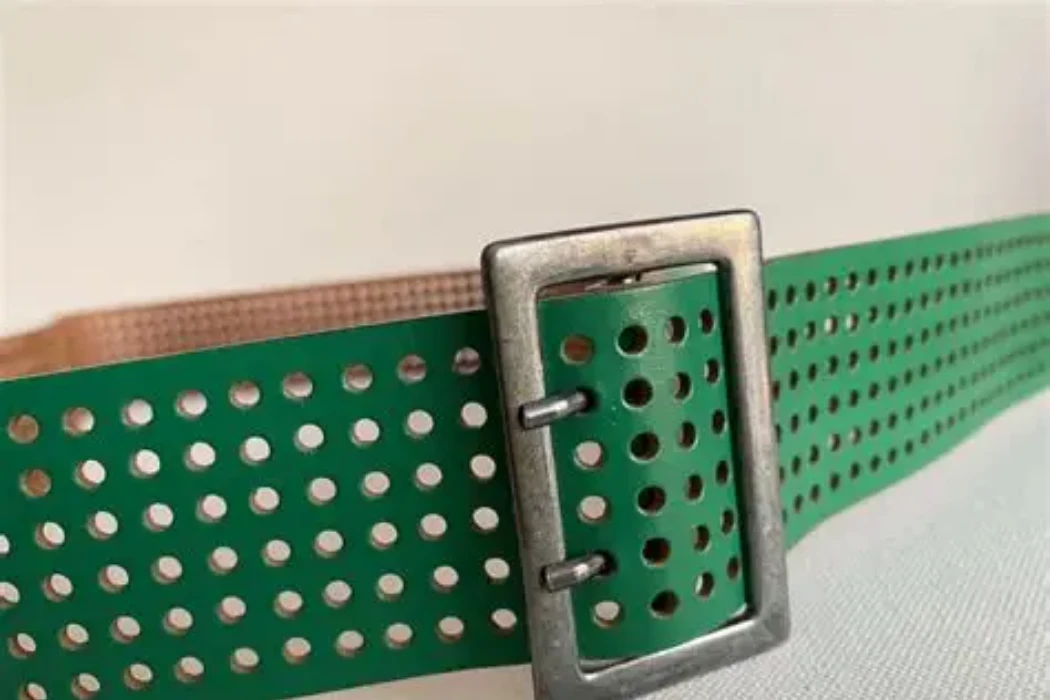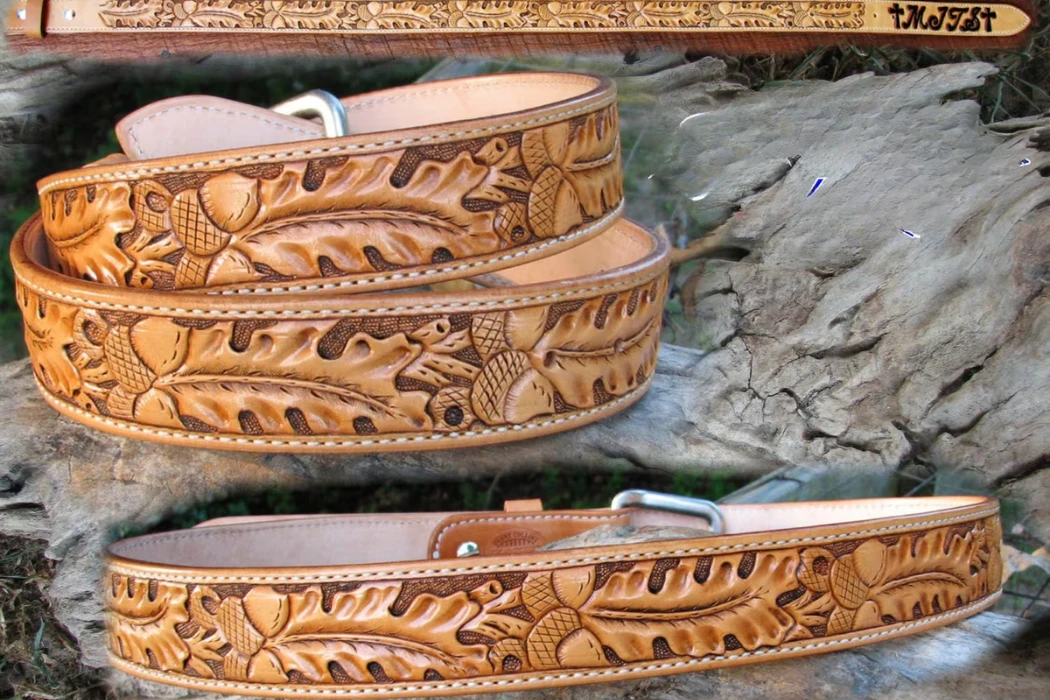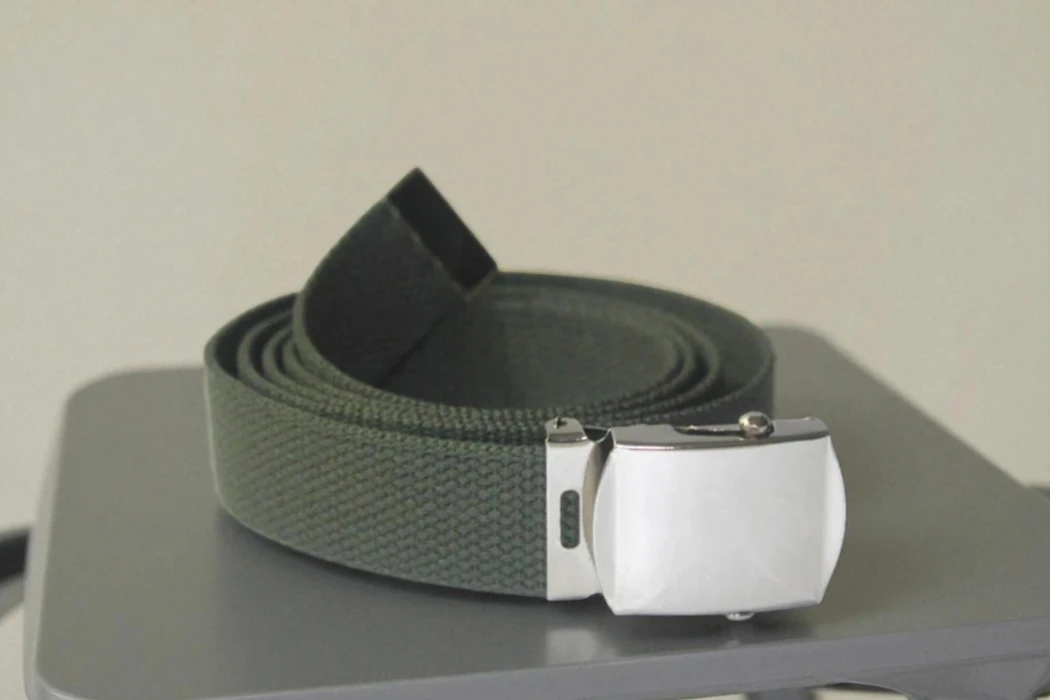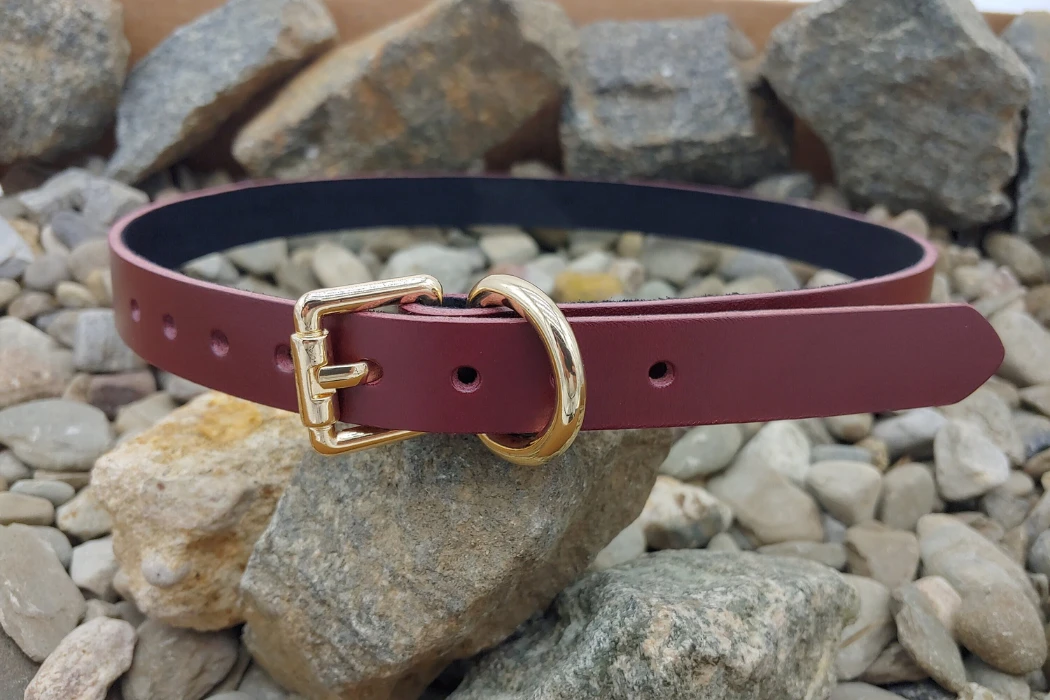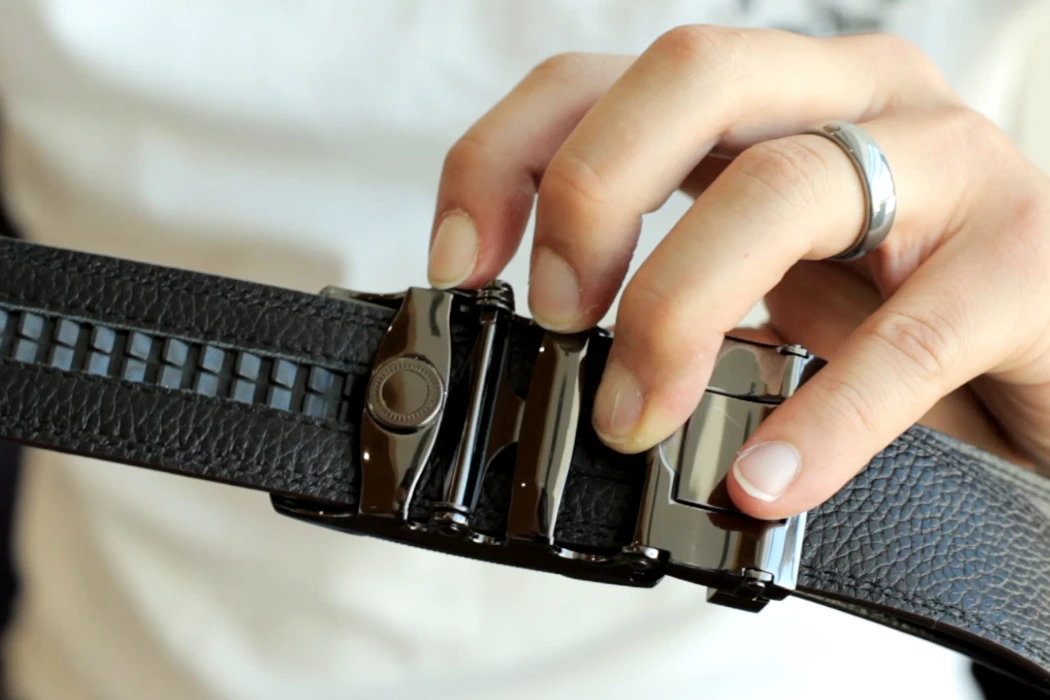
A golf belt should fit comfortably through movement, work with the intended trousers and resist unacceptable colour transfer or hardware deterioration. Those requirements do not create a universal golf-belt material grade or a single laboratory threshold. An ordinary dress belt may also be suitable when its fit and construction meet the same needs.
For a custom golf belt project, start with the wearer, market, appearance and expected conditions. Then define material, dimensions, hardware and an agreed physical testing plan. A complete sample is more informative than an unsupported “professional-grade” label.
This guide examines those choices for men’s leather and synthetic golf belts. For other mechanisms and constructions, see the specialty belt sourcing guide.
What Materials Make the Best Leather Golf Belts?
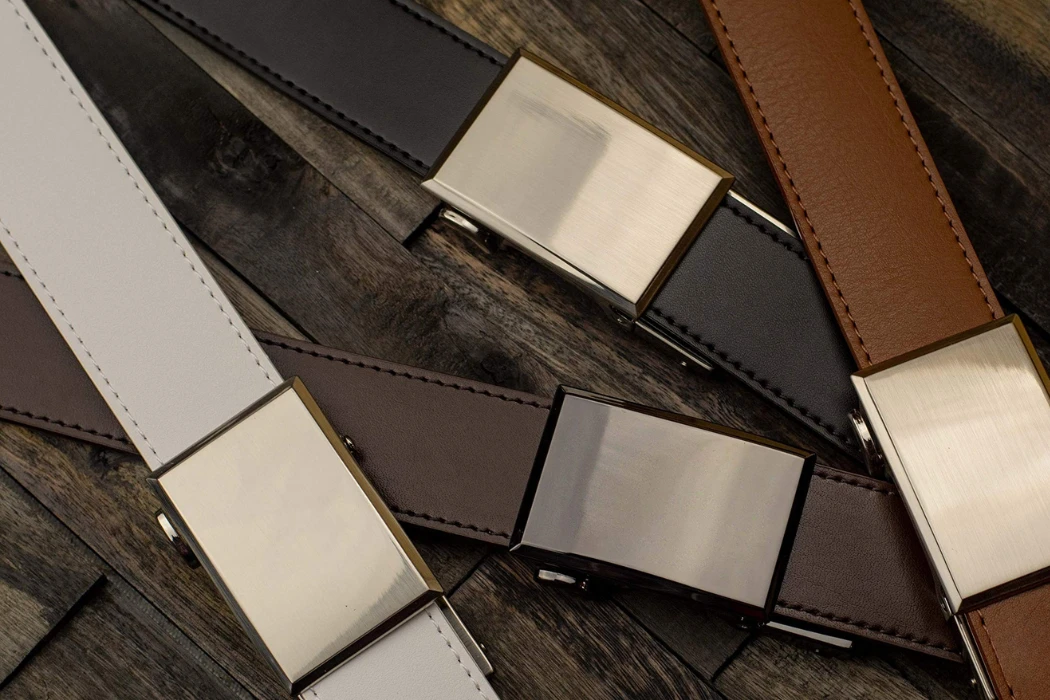
Choose the material and finish together. Leather grain, tannage, surface coating, backing and assembled thickness all influence the result. Neither a premium name nor a synthetic composition establishes water resistance or service life by itself.
Full-Grain Leather and Construction Quality
Full-grain leather retains its grain surface without corrective removal. It can suit a golf belt, but it is not naturally waterproof and does not prevent holes from stretching under every condition. Specify the temper, finish, acceptable natural marks and finished construction.
Thickness should suit the buckle, desired flexibility and any lining. There is no universal thickness required to withstand a golf swing. An aniline or semi-aniline description also does not guarantee a measured level of breathability or sweat resistance.
Top-Grain and Corrected-Grain Options for Uniform Finishes
Top-grain is used broadly and inconsistently in trade, so ask whether the grain has been corrected. Corrected-grain leather has undergone surface correction, which may be followed by finishing or embossing. There is no universal depth of sanding or embossing temperature for all such leather.
A coated or textured finish can support a consistent collection, but approve acceptable colour and texture variation. Request relevant colour-fastness evidence on the actual finish rather than assuming a topcoat permanently stops transfer to light trousers.
PU and Non-Animal Alternatives
A PU-coated material may offer useful surface water resistance, but the backing, edges, holes and joints affect the whole belt. Do not describe every PU belt as completely waterproof or lighter by a fixed percentage. Evaluate the proposed composite after appropriate flexing and ageing.
Microfiber describes a type of structure or backing, not a universal tensile result. Bonded leather containing animal leather fibres is not a vegan alternative. Verify composition and other components before making a whole-product non-animal claim.
| Material | Specify | Evaluate |
|---|---|---|
| Full-grain leather | Tannage, finish, thickness and natural variation | Comfort, colour transfer, flex and hardware fit |
| Corrected-grain leather | Surface treatment, embossing and coating | Finish integrity and consistency after use-related checks |
| PU or microfiber composite | Coating, backing, layers and claimed composition | Flex, ageing, edge integrity and any water-resistance claim |
How Do Manufacturers Control Belt Dimensions and Sizing?
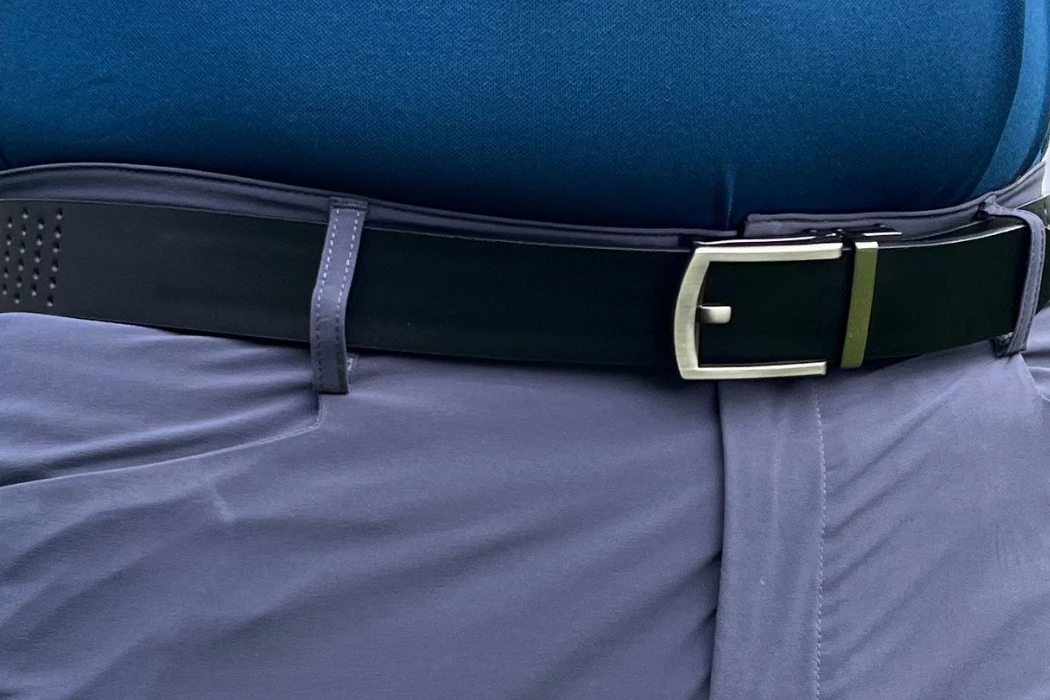
A technical pack should state the measurement method as well as the dimensions. Define width, thickness, usable adjustment range and the buckle reference point. Set tolerances around actual fit and production capability instead of copying a generic golf-belt chart.
Men’s Sizing Guidelines and Measurement Points
Retail size ranges differ between brands. Adding a fixed amount to a trouser size is not a universal sizing method, and total strap length is different from buckle-to-hole wearing length. Use the belt sizing guide to agree the datum used on drawings, inspection sheets and customer instructions.
Approve the size range with the intended trousers and buckle. Where dimensions are shown in inches and centimetres, convert accurately and state the rounding convention. Check the smallest and largest sizes as well as the central sample.
Precision Cutting and Local Skiving
Choose strap width for the intended trouser loops and buckle opening. Cutting equipment can support consistency, but the finished width also needs checking after edge treatment. A nominal machine setting does not prove every finished strap fits.
Local skiving can reduce bulk at the buckle-end fold. The remaining thickness depends on the leather, fold, fastener and reinforcement. Approve the completed joint rather than prescribing one skived thickness for every belt.
Hole Spacing and Ratchet Track Alignment
For pin buckles, specify the number, shape and spacing of holes and the target wearing position. For ratchet designs, identify the exact buckle and track system, its usable range and attachment method. Track spacing and adjustment count are supplier-specific.
Operate samples across the full range. Check that the strap enters cleanly, the mechanism holds and releases as intended, and any cut-to-fit process preserves the necessary engagement. Confirm instructions before packaging approval.
Why Is Hardware Selection Critical for Golf Belts?
Hardware needs to function comfortably and maintain the agreed appearance under expected conditions. Specify the alloy, finish, geometry and attachment together. Material names alone cannot guarantee corrosion resistance or prevent mechanical failure.
Corrosion Resistance in Stainless Steel, Brass and Other Alloys
Stainless steel and brass can be appropriate options, but neither is immune to every form of corrosion or discolouration. Brass can tarnish; stainless performance depends on grade, condition and exposure. Review the actual surface treatment and care instructions.
A suitably designed zinc-alloy buckle is not automatically unsuitable for a golf belt. Alloy, casting quality, section size and finish influence performance. Test the proposed assembly against the agreed requirement instead of assigning one strength value to every zinc alloy.
Traditional Pin Buckles and Adjustable Ratchet Buckles
A pin buckle needs compatible prong geometry and hole clearance. A ratchet buckle uses a matching locking mechanism and track; designs differ in materials and release action. Neither system has a universal holding force or prong diameter.
Compare ease of adjustment, bulk and comfort on the wearer. The buckle construction comparison also explains why attachment details matter beyond the front appearance.
Securing the Buckle Attachment
Stitching, rivets, screws, snaps or clamps may be appropriate depending on the design. For sewn joints, specify thread, seam arrangement and material compatibility. More stitches or an additional rivet do not automatically strengthen a poorly designed fold.
Inspect the joint after the agreed functional and attachment tests. Watch for loose fasteners, damaged leather, thread cutting and excessive movement. Avoid a claim that any construction guarantees the buckle can never separate.
How Do Factories Test Golf Belt Durability?
Define tests from intended use and known failure modes. Separate material properties from the complete strap-and-buckle assembly, and record test methods, conditioning, specimen identity and acceptance criteria. A laboratory pass supports the specified requirement, not flawless performance forever.
Strap and Buckle Attachment Testing
A leather tear or tensile test measures a specimen under defined conditions. An assembled-belt pull test evaluates a different system, including the buckle, fold and fastening. Choose fixtures and loading directions that make the result meaningful for the design.
Do not present an arbitrary force as a universal golf-swing requirement. Record both the measured result and failure location. Recheck changes to the strap construction or attachment that could invalidate the approved result.
Dry Rubbing, Wet Rubbing and Perspiration
Colour transfer is especially visible against light clothing. Test the relevant face, lining and edges using agreed methods. ISO 11640 concerns colour fastness to rubbing; the method and selected conditions must be reported with the result.
Wet rubbing is not the same as a perspiration test. If sweat exposure matters, agree a suitable separate method with the laboratory. No unsupported fixed cycle count establishes that colour can never transfer during use.
Hardware Functionality and Exposure Checks
Assess repeated operation, retention and release on the intended buckle-and-strap pair. Set any operation count and acceptance criteria in the buyer’s specification. Inspect functional deterioration as well as cosmetic change.
ASTM B117 describes salt-spray apparatus and operation. It does not establish a universal exposure duration for golf buckles or translate hours into rust-free consumer life. Choose relevant exposure and evaluation criteria for the actual finish.
| Check | Agree before testing | Interpretation |
|---|---|---|
| Strap or attachment force | Specimen, fixture, direction and requirement | Evidence for the tested material or assembly |
| Colour transfer | Dry, wet or perspiration method and rating | Conditions are distinct; one result does not cover all |
| Hardware operation and corrosion | Method, duration or cycles and evaluation criteria | No automatic service-life guarantee |
What Surface Finishes Work Best on the Golf Course?
The finish should match the desired look, feel and use. Evaluate the finished belt after relevant flex and colour-transfer checks. Appearance labels such as matte, pebble or Saffiano are not independent performance grades.
Smooth Matte Finishes and Appearance
A matte finish can provide a subdued appearance. It does not eliminate all reflected light, and there is no universal golf-belt reflectivity percentage. If gloss consistency matters, agree a reference sample or a defined measurement method.
Application and curing depend on the finish system and material. Follow the finish supplier’s process guidance rather than specifying a single baking temperature. Check for tackiness, cracking and unacceptable colour change on the finished sample.
Pebble and Saffiano Textures
Embossed textures can change how small scuffs are perceived, but do not automatically improve scratch resistance by a fixed percentage. The material, relief and finish influence both appearance and performance.
Agree pattern scale, placement and acceptable variation. Tooling pressure and heat belong in a validated process for the selected material, not a universal tonnage claim. Inspect the texture after finishing and flexing.
Burnished and Painted Edges
Burnishing and edge painting are different finishing routes. The suitable method depends on the leather or composite and desired edge appearance. Neither route should be described as making every layered belt completely waterproof.
Use compatible preparation, coating and curing instructions. Inspect edge adhesion and flexibility at bends and holes. Avoid generic high-temperature instructions or a fixed number of coats without reference to the actual finishing system.
Frequently Asked Questions
What is the standard width for a men’s golf belt?
There is no single mandatory width. Match the strap to the intended trouser loops, buckle and brand design, then approve the finished dimensions and tolerance.
Do leather golf belts need to stretch?
They need comfortable fit and sufficient dimensional stability for their construction. Excessive permanent extension can be a defect, while some elastic or braided designs intentionally allow movement. Specify the expected behaviour.
How long does a genuine leather golf belt last?
Material, construction, finish, use and care determine service life. The words genuine or full-grain do not support a fixed number of years. See the belt material quality guide for evidence to request.
Can you wear a regular leather dress belt for golf?
Yes, if it fits comfortably and suits the clothing and conditions. A dress-belt label does not prove that the strap will fail quickly on the course.
Are leather golf belts waterproof?
Do not assume so. Evaluate any water-resistance claim for the actual material and assembled construction. A PU surface also does not establish that the whole belt is waterproof.
Why do some golfers prefer ratchet belts?
They can offer convenient incremental adjustment. The spacing, range and release feel vary between systems, so compare actual samples rather than a universal adjustment figure.
How do factories reduce colour transfer to pants?
They select compatible materials and finishes, control processing and check relevant colour-fastness requirements. Approve results for the actual colour and construction; no generic topcoat guarantees zero transfer in all conditions.
What is the best way to clean a leather golf belt?
Follow the material supplier’s care instructions. Remove surface dirt gently, avoid soaking and direct heat, and trial any cleaner on an inconspicuous area. Allow a damp belt to dry naturally before storage.
Planning a Golf Belt Order
Build the order around a clear material specification, wearing range, buckle assembly and test plan. Keep the approved sample and production records aligned so that substitutions can be assessed before release.
Hoplok can review your golf-belt design through its custom belt programme. Leather belt MOQ is 300 units and PU belt MOQ is 1,000 units; belt samples take 2–3 weeks and bulk production 60–90 days. Confirm colours, hardware, evidence requirements and the schedule in the quotation. The MOQ planning guide helps organise those decisions.