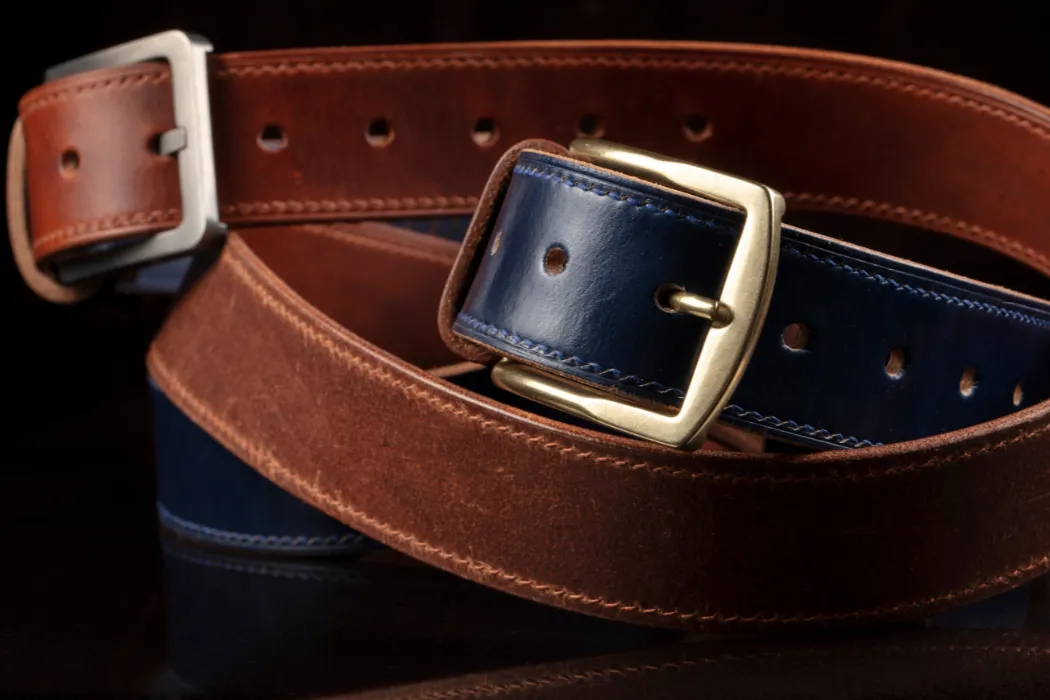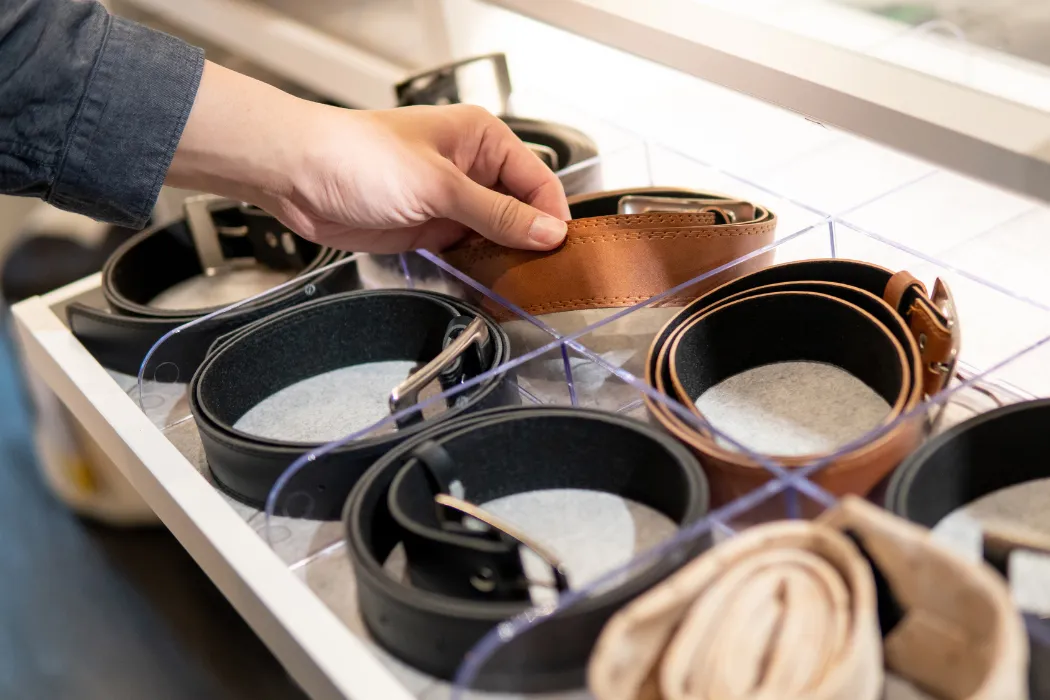
Manufacturing Nomenclature is the precise code of communication between brand owners and OEM factories. In the belt supply chain, terminology defines not just components, but Cost Structure and Quality Standards. Mastering the correct terms—such as distinguishing ‘Full Grain’ from ‘Corrected Grain’, or ‘Skiving’ from ‘Splitting’—is the first line of defense against suppliers swapping materials or delivering products that fail BOM specifications.
Key Takeaways for Sourcing Managers
- Eliminating Ambiguity: Vague terms like “Genuine Leather” are legal loopholes; precise terms like “Top Grain Nubuck” are contractual shields.
- Process Control: Knowing the difference between a “Feather Edge” and “Burnishing” determines whether your product retails for $20 or $100.
- Defect Identification: Using standard defect terminology (e.g., “Vein Marks” vs. “Scratches”) in QC reports prevents factories from denying responsibility.
- Structured Index: This guide categorizes 50 essential terms across Raw Materials, Fabrication, Hardware, Defects, and Trade Compliance for rapid reference.
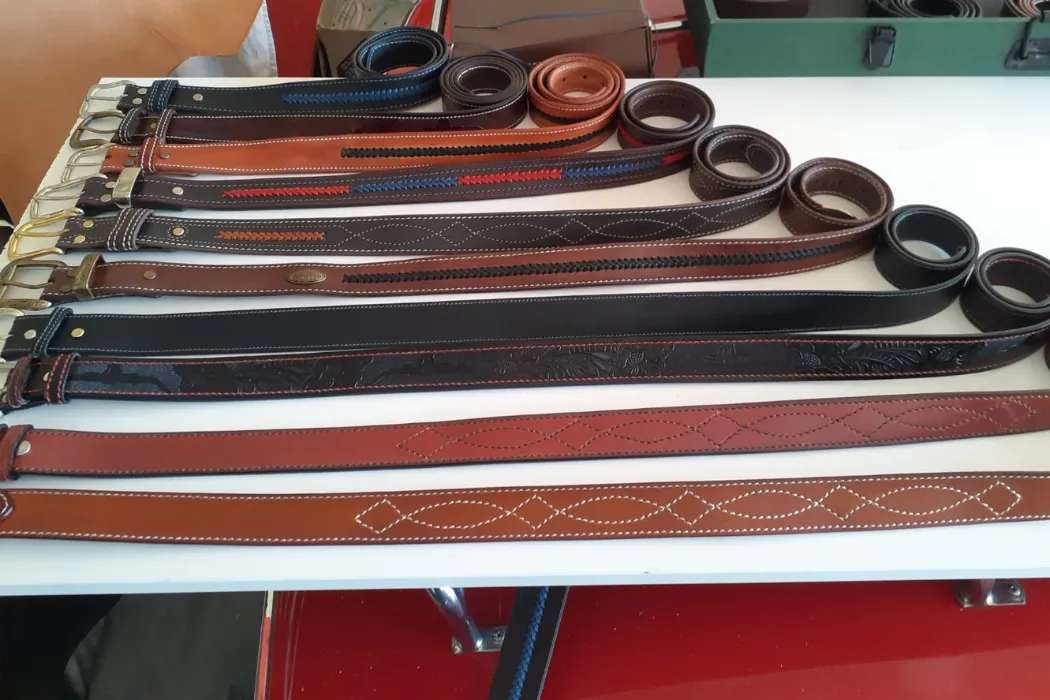
What Are the 12 Critical Terms for Raw Material Grading?
This category defines the value of the hide. Terms like Full-Grain (unaltered epidermis) and Top-Grain (sanded surface) dictate the price per square foot. Understanding Corium (the fibrous center) vs. Flesh Side (the bottom) is essential for identifying split leather. Sourcing managers must specify “Aniline” (dyed through) vs. “Pigmented” (surface painted) to control the aging potential of the product.
Hierarchy of Quality: The “Grain” Terms
In leather sourcing, the “Grain” refers to the outermost surface of the skin. This is where the fibers are tightest and most durable.
- 1. Full-Grain: The highest grade. It includes the complete epidermis with all natural pores and characteristics intact. It is never sanded. This provides maximum tensile strength and breathability.
- 2. Top-Grain: The second grade. The top few millimeters of the surface have been sanded or buffed (corrected) to remove scars and insect bites. It is smoother and more uniform than Full-Grain but less durable because the strongest fibers have been removed.
- 3. Genuine / Split Leather: The bottom layer of the hide after the Full-Grain top has been separated (split) off. It has no natural grain. To be used for belts, it must be coated with a heavy layer of PU paint or artificial grain embossing.
- 4. Bonded Leather: Also known as reconstituted leather. It is a composite material made of leather dust and scraps bonded together with latex or polyurethane glue. It lacks structural integrity and cannot be burnished.
Processing State: From Wet to Dry
Understanding the state of the material helps in negotiating lead times.
- 5. Wet Blue: Hides that have been chrome-tanned but not yet dyed or finished. They are moist and blue in color. Tanneries trade Wet Blue as a commodity.
- 6. Crust: Leather that has been tanned and dried but not yet dyed or finished. It is the blank canvas before the final color is applied.
- 7. Temper: The pliability or rigidity of the leather. For belts, you typically specify a “Firm Temper” or “Stiff Temper.” Handbags usually require a “Soft Temper.”
Tanning and Finishing Technology
The chemical process dictates the leather’s behavior over time.
- 8. Veg-Tan (Vegetable Tanned): Tanned using natural tree barks and tannins. It is rigid, eco-friendly, and develops a patina. It is the gold standard for heavy-duty belts.
- 9. Chrome-Tan: Tanned using chromium salts. It is soft, pliable, and heat-resistant, but does not burnish well. Common in fashion belts.
- 10. Aniline: Leather dyed exclusively with soluble dyes without covering the surface with a topcoat paint. The natural pores remain visible.
- 11. Pigmented: Leather finished with a solid layer of pigment (paint). This creates a uniform color and high stain resistance but looks less natural.
- 12. Patina: The soft sheen and darkening that develops on Full-Grain Veg-Tan leather through oxidation and use. It is a desirable trait of quality.
Information Gain: Drum Dyed vs. Spray Dyed
A critical check for quality is inspecting the cross-section (cut edge) of the strap.
Drum Dyed (Through-Dyed): The hide is tumbled in a dye drum for hours. The color penetrates 100% through the thickness. If you cut the belt, the center is the same color as the surface.
Spray Dyed (Surface Dyed): The color is sprayed only on the top. If you cut the belt, the center remains blue (chrome) or beige (veg). This is cheaper but reveals the core color if the belt is scratched.
B2B Tip: Writing a Defensible PO
Never write “Real Leather Belt” on your Purchase Order. This legally allows the factory to use coated Split Leather. Instead, specify: “Article #101, Full-Grain Vegetable Tanned Shoulder, 3.8mm Thickness, Firm Temper, Drum Dyed Black.” This specificity legally binds the factory to deliver premium material.
| Term | Definition | Visual Sign | Price Index ($) | Common Use |
|---|---|---|---|---|
| Full-Grain | Un-sanded top layer | Visible pores, natural variation | $$$$$ | Luxury / Heritage Belts |
| Top-Grain | Sanded surface | Perfectly smooth, no pores | $$$ | Fashion / Mid-range |
| Split (Genuine) | Bottom fibrous layer | Fuzzy back, painted front | $$ | Mass Market / Budget |
| Bonded | Glue + Dust | Uniform grey back, peels easily | $ | Fast Fashion / Promotional |
How Do These 10 Fabrication Terms Dictate Labor Costs?
These terms dictate the labor cost (Standard Minute Value). Skiving reduces thickness at fold points to prevent bulk, while Splitting reduces the overall thickness of the entire hide. Feather Edge creates a domed, raised center for a dressy look, whereas Raw Edge implies a rugged, casual finish. Specifying a “Burnished Edge” versus a standard “Inked Edge” changes the production time by roughly 20 minutes per dozen, directly impacting your FOB price.
Thickness and Profiling
Precision in thickness is the hallmark of a quality belt.
- 13. Splitting: The process of slicing the entire hide horizontally to achieve a uniform gauge (e.g., thinning a 4mm hide to 3.5mm). This is done by machine for the whole strap.
- 14. Skiving: A localized thinning process. We “skive” only the area where the leather folds over the buckle to prevent a bulky lump. It requires a skilled operator to feather the edge to zero.
- 15. Feather Edge: A construction style where the belt is thick in the center and tapers down to a thin edge. It usually requires a filler and skived edges, signaling high-end formal wear.
- 16. Bombé: The raised, rounded profile in the center of a Feather Edge belt. This is achieved by inserting a “Filler” strip (leather or rope) between the top layer and the lining.
Edge Finishing Techniques
The edge is the first place a belt fails. The finishing method determines longevity.
- 17. Raw Edge: The leather edge is cut and left unfinished. Only high-quality Veg-Tan leather looks good raw; cheap leather reveals the ugly internal fibers.
- 18. Burnishing: A labor-intensive process where the raw edge is rubbed at high speed with wax or gum tragacanth until the friction heat fuses the fibers into a smooth, glossy, sealed surface. It will never peel.
- 19. Inking (Edge Paint): Applying liquid polyurethane paint to the edge. Cheap belts get 1 coat; premium belts get 3 coats with sanding in between. If the paint quality is poor, it will crack (flex fatigue) within months.
Components and Shapes
Correctly naming the parts prevents assembly errors.
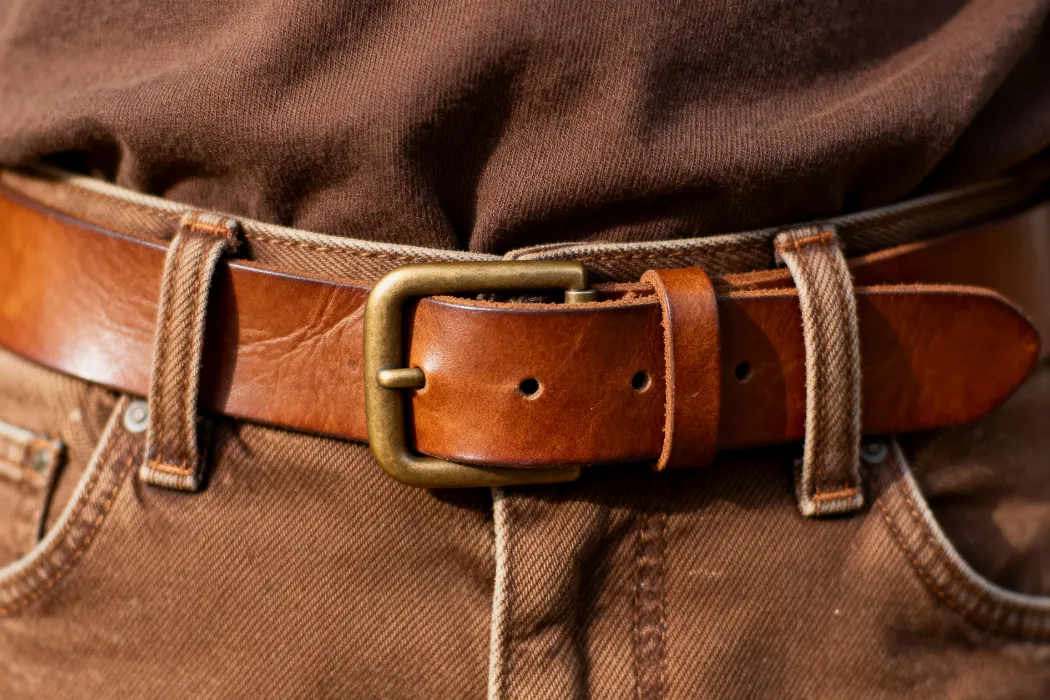
- 20. Keeper Loop: The leather loop that holds the strap tail. A “Fixed Keeper” is sewn near the buckle; a “Floating Keeper” slides freely.
- 21. Point End: A standard V-shaped tip.
- 22. English Point: A tapered, spear-shaped tip often used in heritage or formal belts. It requires a specific cutting die.
Information Gain: Lining Materials and SPI
Two hidden specs that define luxury:
Lining Quality: Cheap belts use PU Lining (sweaty, slippery). Premium belts use Nubuck Lining (velvety leather) or Full-Grain Lining. Nubuck provides friction to keep the belt from sliding up your waist.
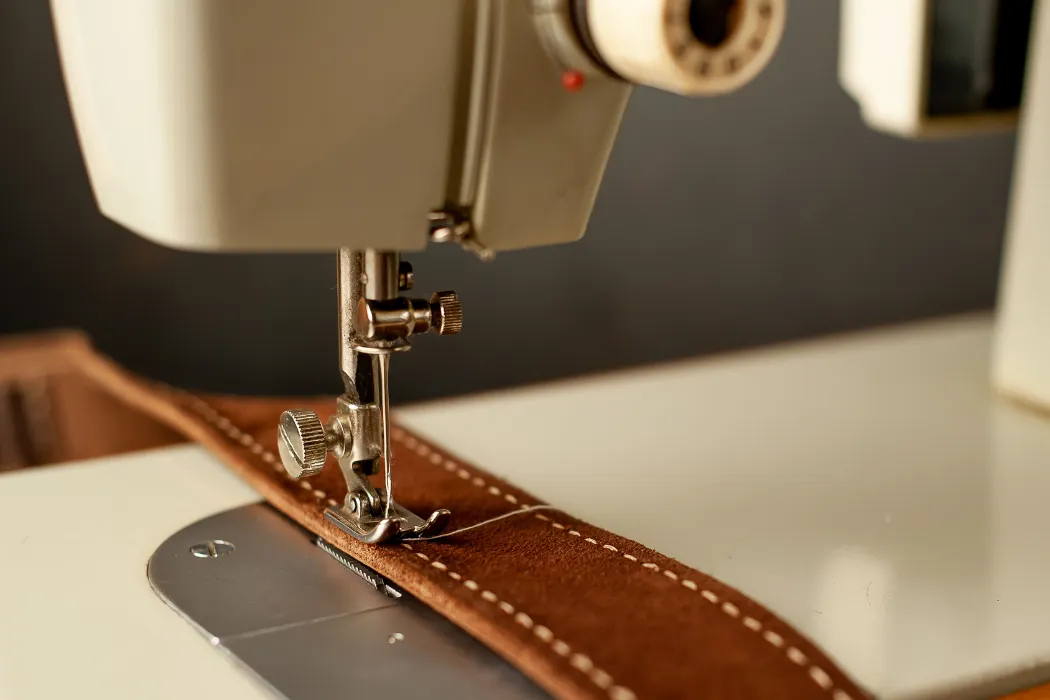
Stitch Density (SPI): “Stitches Per Inch.” A standard commercial belt uses 6 SPI (fast production). A luxury belt uses 9–10 SPI. Higher density looks refined but requires slower sewing speeds to prevent needle perforation issues.
| Term | Process Description | Durability | Style Suitability |
|---|---|---|---|
| Burnished Edge | Friction sealing fibers | High (Cannot peel) | Casual / Heritage |
| Inked Edge (Paint) | Applied liquid PU layer | Medium (Can crack) | Formal / Fashion |
| Turned Edge | Leather wrapped around | High (Protected) | Luxury Dress |
| Raw Edge | Cut only, no finish | Medium (Fraying risk) | Rugged Workwear |
Which 8 Hardware Terms Define Mechanics and Plating?
Hardware terms define function and longevity. Prong is the metal pin; Chape is the leather fold holding the buckle. Understanding PVD (Physical Vapor Deposition) versus standard Electroplating ensures you order the right finish durability. Terms like “Roller Bar” imply functional movement, while “Chicago Screw” allows for interchangeable buckles. Zamak refers to zinc alloy, whereas Solid Brass indicates a non-ferrous, premium base metal.
Base Metals: The Core Material
The substrate determines the weight and corrosion resistance.
- 23. Zamak (Zinc Alloy): The industry standard for mass-market buckles. It is die-cast, lightweight, and brittle. If the plating chips, the grey base metal corrodes (pits) rapidly.
- 24. Solid Brass: An alloy of copper and zinc. It is heavy, dense, and naturally corrosion-resistant. It does not rust; it oxidizes to a patina. Essential for belts retailing over $80.
- 25. Stainless Steel: Usually Grade 304 or 316. It requires CNC machining rather than casting. It is hypoallergenic (nickel-free), extremely hard, and virtually indestructible.
Finishing Technologies
How the color is applied dictates how long it stays on.
- 26. Electroplating: The standard process of using electrical current to deposit a thin layer of metal (nickel, gold, chrome) onto the buckle. It is decorative but susceptible to scratching.
- 27. PVD (Physical Vapor Deposition): A high-tech vacuum coating process used in luxury watches. It bonds titanium nitride particles to the metal, creating a finish that is 10x harder than electroplating and won’t fade. Ideally suited for Matte Black finishes.
- 28. Lacquer (E-Coat): The invisible hero. It is a clear, protective topcoat applied over the plating to seal it from oxygen and sweat. “Electrophoretic Lacquer” (E-Coat) is superior to spray lacquer as it covers every micron evenly.
Mechanical Components
These terms define how the buckle interacts with the strap.
- 29. Prong (Tongue): The metal pin that goes through the belt hole. Its shape (flat vs. round) must match the hole shape.
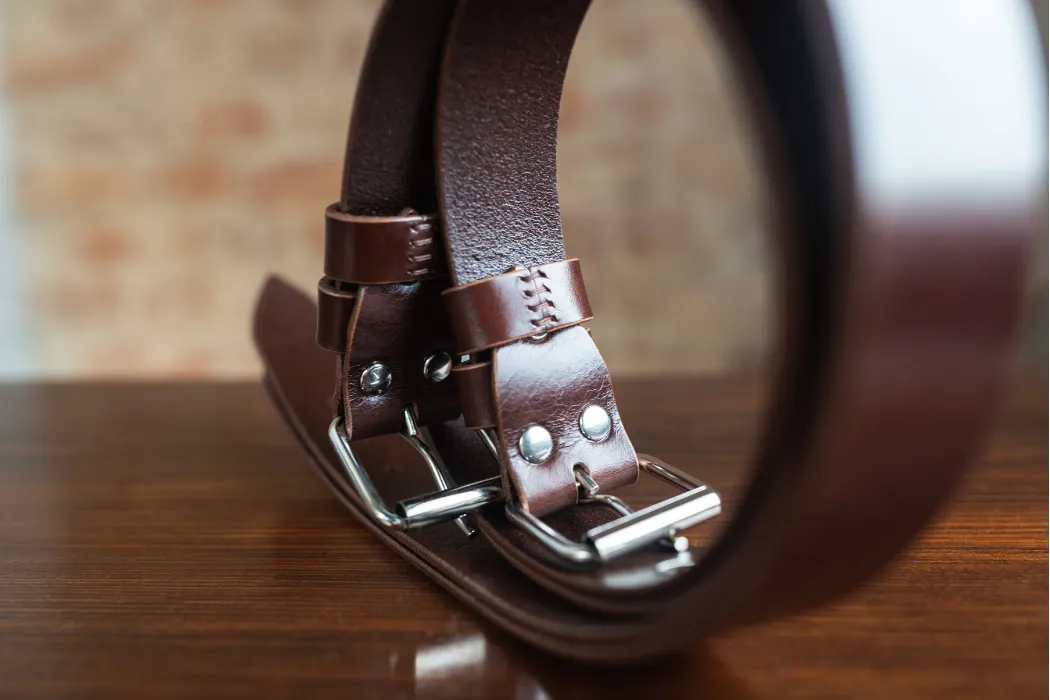
- 30. Chicago Screw: A two-part threaded post mechanism (male and female) used to attach the buckle. Unlike a permanent Rivet or Stitch, it allows the user to unscrew and swap buckles.
Information Gain: The Critical Role of Lacquer
Why do some gold buckles turn black in a month while others shine for years? The secret is Lacquer. Electroplating is porous. Without a high-quality lacquer sealant, the underlying copper or brass will react with sulfur in the air (tarnishing).
Sourcing Tip: Always specify “Double Lacquer” or “Hard E-Coat” in your Tech Pack for high-humidity markets. This adds pennies to the cost but years to the shelf life.
Critical Thinking: Chicago Screws vs. Rivets for B2B
For a Private Label brand, inventory flexibility is cash.
Rivets/Stitching: Permanent. You must stock “Black Belt + Silver Buckle” and “Black Belt + Gold Buckle” as separate SKUs.
Chicago Screws: Modular. You can stock “Black Straps,” “Silver Buckles,” and “Gold Buckles” separately. You assemble them only when an order comes in. This drastically reduces your inventory holding cost and deadstock risk.
How Should You Describe These 10 Defects in a QC Report?
Precision in defect reporting reduces friction. Do not simply say “it looks bad.” Use specific terms: “Loose Grain” refers to the structural separation of layers causing wrinkles, while “Vein Marks” are natural blood vessel traces. Distinguish between “Scratches” (mechanical damage) and “Healed Scars” (natural animal marks). Precise terminology forces the factory to acknowledge the root cause—whether it is a raw material failure or a handling error—and prevents them from dismissing defects as “natural characteristics.”
Natural Imperfections vs. Process Faults
You must distinguish between the animal’s history and the tannery’s failure.
- 31. Loose Grain: A structural defect where the top grain separates from the underlying fibers (corium). When you bend the belt, it creates large, ugly, bubbling wrinkles. This is a rejectable material flaw, often caused by sourcing from the belly area.
- 32. Vein Marks: Branching lines visible on the surface, remnants of the animal’s blood vessels. Acceptable in rugged/casual styles; rejectable in formal dress belts.
- 33. Fat Wrinkles: Deep creases usually found near the neck or shoulder of the hide. They indicate strong leather but may disrupt a clean look.
- 34. Healed Scars: Old scratches (from barbed wire or horns) that healed while the animal was alive. They appear as smooth, shiny lines. Generally acceptable in “Heritage” grades as proof of authenticity.
- 35. Tick Marks: Small pinholes or spots caused by insect bites. If too dense, the leather looks pitted.
Manufacturing and Finishing Defects
These are man-made errors during production.
- 36. Spew / Bloom: A white, hazy, fatty substance that rises to the surface of the leather. It is caused by excess fatliquors crystallizing due to temperature changes. It can usually be wiped off but indicates chemical imbalance.
- 37. Crocking: The transfer of dye from the leather to another surface (like your pants) when rubbed. A major failure in quality control.
- 38. Color Migration: When the dye from the leather bleeds into the lining material or the edge paint, causing fuzzy or stained borders.
- 39. Piping: When the belt is bent, the edges collapse or wrinkle inward instead of remaining smooth. Often caused by poor skiving or weak filler material.
- 40. Branding Marks: Large fire-brand scars from the cattle ranch. While “cool” for niche western belts, these are generally considered scrap waste for standard production.
Information Gain: The Crocking Standard
How much dye transfer is too much? We use the AATCC 8 / ISO 105-X12 standard.
Dry Rubbing: Must achieve Grade 4.0 or higher (minimal transfer).
Wet Rubbing: Must achieve Grade 3.5 or higher.
If a belt fails this (e.g., Grade 2), it will ruin your customer’s white chinos, leading to expensive liability claims.
Hoplok Standard: Grading Defects by Zone
We do not reject every mark; we grade by location.
Class A Defects (Allowed): Minor healed scars or faint veins in Zone C (the area near the holes or tip, often covered).
Class B Defects (Rejected): Any loose grain, deep scratches, or open scars in Zone A (the center of the belt, visible on the waist). We strictly cull belts that show structural weakness in high-stress areas.
| Defect Name | Cause (Nature/Machine) | Acceptability (High End vs. Low End) | Prevention |
|---|---|---|---|
| Loose Grain | Nature (Belly section) | Always Reject | Cut strictly from the Double Butt/Shoulder |
| Vein Marks | Nature | Acceptable (Casual) / Reject (Formal) | Select higher grade hides (Grade A) |
| Crocking | Machine (Poor dye fix) | Always Reject | Proper drum fixing & washing |
| Cracked Edge | Machine (Bad paint) | Always Reject | Use high-elasticity PU edge paint |
What Are the 10 Key Acronyms for Trade and Compliance?
Acronyms govern the supply chain. MOQ (Minimum Order Quantity) and MCQ (Minimum Color Quantity) define your batch sizes and unit costs. BOM (Bill of Materials) is the ingredient recipe for your product. LDP (Landed Duty Paid) includes all taxes and delivery, whereas FOB (Free on Board) transfers logistics liability to you at the port. Compliance terms like REACH (EU chemical ban) and Prop 65 (California toxicity rules) are non-negotiable legal requirements for export.
Commercial Terms
These define the quantity and financial structure of the deal.
- 41. MOQ (Minimum Order Quantity): The smallest number of units a factory will produce. For custom belts, this is usually 300 pieces to amortize the setup of the cutting dies.
- 42. MCQ (Minimum Color Quantity): The smallest number of units per color. You might have an MOQ of 300 belts, but an MCQ of 100 per color (e.g., 100 Black, 100 Brown, 100 Tan).
- 43. BOM (Bill of Materials): A comprehensive list of every component (leather, thread, glue, buckle, screw, packaging) required to make one unit. It is the basis for accurate costing.
- 44. Tech Pack: The engineering blueprint. It must contain the technical sketch, measurements, BOM, stitching instructions, and branding placement. Without a Tech Pack, a quote is just a guess.
Incoterms (Logistics)
These define who pays for shipping and who carries the risk.
- 45. EXW (Ex-Works): You pick up the goods at the factory door. You pay for all shipping and export customs. Highest risk for the buyer.
- 46. FOB (Free on Board): The factory pays to get the goods onto the ship. You pay for the ocean freight and insurance. The industry standard for B2B.
- 47. LDP (Landed Duty Paid): The supplier delivers goods to your warehouse with all duties and taxes paid. Easiest for the buyer, but often includes a hidden markup.
Compliance and Regulations
Ignoring these can lead to your shipment being seized or destroyed.
- 48. REACH: The European Union regulation concerning the Registration, Evaluation, Authorization, and Restriction of Chemicals. It strictly limits substances like Chromium VI and Azo dyes.
- 49. Prop 65 (California Proposition 65): A US law requiring warning labels on products containing chemicals known to cause cancer or reproductive toxicity (e.g., Lead in brass, Phthalates in plastic).
- 50. GSP (Generalized System of Preferences): A preferential tariff system that allows goods from developing countries (like Cambodia) to enter developed markets (like the US or EU) duty-free.
Strategic Advice: Leveraging GSP for Profit
Smart sourcing managers use GSP as a negotiation tool. Manufacturing in China often incurs a 25% tariff (Section 301). Manufacturing the same belt in our Cambodia factory utilizes GSP status, dropping the duty to 0%. This geographic arbitrage can save you $2–$3 per belt on landed cost, far outweighing minor savings on EXW price.
| Acronym | Full Name | Meaning in Context | Impact on Price/Timeline |
|---|---|---|---|
| MOQ | Minimum Order Quantity | Entry ticket to production | Lower MOQ = Higher Unit Price |
| BOM | Bill of Materials | Cost breakdown list | Determines raw material cost |
| FOB | Free On Board | Factory clears export | Best balance of control/cost |
| REACH | Registration, Eval… of Chemicals | EU Chemical Safety | Non-compliance = Customs Seizure |
Frequently Asked Questions
What are the different parts of a belt called?
Key components include the Strap (main body), Buckle (frame and prong), Keeper (the loop), Chape (the fold holding the buckle), and Tip (the end). Using these precise terms in your Tech Pack prevents assembly errors, such as the factory stitching the keeper in the wrong location or using the wrong tip shape.
What is the difference between full grain and top grain leather?
Full-Grain retains the entire outer epidermis and natural grain pattern, making it the strongest grade. Top-Grain has had the outer layer sanded off to remove scars, resulting in a uniform but weaker surface. Sourcing managers must specify “Full Grain” to ensure maximum tensile strength and patina potential.
What does skiving mean in leather manufacturing?
Skiving is the precision process of shaving the leather thickness at specific edges or folds. It reduces bulk at the buckle fold to ensure the hardware sits flat. Without skiving, the belt fold looks thick, stiff, and amateurish, affecting the perceived value of the product.
What is the loop on a belt called?
It is technically called a “Keeper” or “Keeper Loop.” Its function is to secure the strap tail (billet) after buckling to prevent it from flapping. Premium belts often feature double keepers: one fixed securely near the buckle and one floating freely for adjustment.
Is bonded leather considered real leather?
Legally yes in some regions, but structurally no. It is reconstituted leather dust mixed with polyurethane glue. It lacks the interwoven fiber structure of a natural hide and will snap under tension. We advise brands to list it specifically as “Bonded Leather” to avoid consumer fraud claims and returns.
What is a burnished edge on a leather belt?
A Burnished Edge is finished by high-speed friction (rubbing) to heat and seal the collagen fibers. This creates a smooth, glossy, and hardened surface without the use of paint. This is structurally superior to cheap “Inked Edges” (Edge Paint), which are just painted on and often peel or crack over time.
The Verdict: Language is Power
In the world of OEM manufacturing, ambiguity is expensive. Every time you use a vague term like “Good Quality,” you give the factory permission to choose the cheapest option. By mastering these 50 essential terms, you regain control of your product. You stop asking for “a leather belt” and start commanding a “Full-Grain, Vegetable-Tanned, Skived, and Burnished strap with Solid Brass hardware.”
We Speak the Same Language
At Hoplok, you don’t need a translator to explain quality. Our engineers are fluent in international manufacturing standards. We don’t cut corners on definitions because we don’t cut corners on production.
Audit Your Tech Pack Today
Are you unsure if your current specs match your brand’s price point? Contact the Hoplok Engineering Team today. Send us your current Tech Pack for a Free Terminology Audit, or download our PDF Glossary to keep on your desk for your next supplier negotiation.
— The Hoplok Technical Development Team